





Asthma Management

Reminder: Request school forms early
If your child needs an Asthma Action Plan, please request it during their summer office visit, via MyChart
or by calling the office at 330-543-0140 at least 14 days before the start of classes.
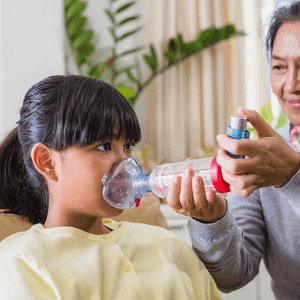
Asthma is a long-term disease of the airways in our lungs. It is the most common chronic illness among children. It is the number one reason children miss school and parents miss work. Asthma can range from mild to severe. Your Primary Care Provider can manage asthma or your child may be referred to our Pulmonary Medicine department or Center for Allergy and Immunology Department based on the severity of asthma or the factors that trigger an asthma flare-up. Akron Children’s team of asthma experts includes physicians, nurse practitioners, nurses, respiratory therapists and certified asthma educators.
Department: 330-543-8885

Pulmonary Medicine, Akron
Akron Children's Pulmonary Medicine, AkronGolisano Campus
Considine Professional Building
215 West Bowery Street -- Level 6
Akron, Ohio 44308
Fax: 330-543-8890
Map & directions
More about this location...
Hours
Monday : 8:00 AM - 4:30 PM
Tuesday : 8:00 AM - 4:30 PM
Wednesday : 8:00 AM - 4:30 PM
Thursday : 8:00 AM - 4:30 PM
Friday : 8:00 AM - 4:30 PM
Appointments: 330-543-8885
Department: 330-543-8885

Chronic Care Education and Support
Akron Children's Chronic Care Education and Support, BoardmanBeeghly Campus
Leonard J. Fisher Family Building – Building A
6505 Market Street
Boardman, Ohio 44512
Map & directions
More about this location...
Department: 330-729-1387
- Asthma Basics: What families need to know
- Asthma: Allergies
- Asthma: Breath-activated dry powder inhalers
- Asthma: How to use a nebulizer
- Asthma: How to use an MDI with a spacer and a mask
- Asthma: How to use MDI with spacer
- Asthma: Medications and treatment plan
- What is an asthma action plan? - Akron Children's video
- Asma: Cómo utilizar un inhalador de dosis medida con espaciador y mascarilla
- Asma: Cómo usar un inhalador de dosis medida con una cámara espaciadora
Pulmonology sees asthma patients until the age of 18, then they are transitioned to an adult provider for their asthma care.
During an asthma flare-up (or attack), the airways in the lungs become irritated and swollen, making breathing harder.
Some flare-ups are mild, but others can be life-threatening. So it’s important to know how to spot them and deal with them right away.
School-Based Asthma Therapy (SBAT) is a program offered through Akron Children’s School Based Health Center to improve asthma symptoms in children who are at high risk for asthma complications. If your child participates in SBAT they will receive controller medication doses at twice a day at school. Patients in the SBAT program have experienced reduced emergency room visit, reduced hospital admissions as well as decreased visits to the school nurse for emergency albuterol use and improved asthma control test scores. When a child’s asthma is controlled, it helps them to stay in school learning by decreasing absences for asthma symptoms.
How will it impact my child’s school day?
Your child’s school nurse with work with your child to find a convenient time in the morning and again in the afternoon to come to the nurse’s office to take their controller medication. The School-Based Health Center Nurse Practitioner (NP) will maintain close contact with the patient and family including a SBHC visit in the fall and spring which include asthma controller test (ACT), monitor symptoms, medication use and refills as well as visits as needed throughout the school year.
How will the medication get to the school each month?
Your child’s prescription will be sent to Akron Children’s Pharmacy to be filled, the community health worker will distribute the medication to the school.
Is there any cost?
The program is free for all patients. For some patients with private insurance there may be co-pays for the medication and visits with SBHC.
People with asthma often use inhalers (also called puffers) to take their medications. A spacer (also sometimes called a holding chamber) is a device that makes using an inhaler easier and more effective. It attaches to the inhaler on one end and to a mouthpiece or mask on the other end. When the medication from the inhaler is released into the spacer, it’s held inside until it’s slowly inhaled through the mouthpiece or mask. It doesn’t require special coordination that the use of an inhaler alone requires. A spacer also helps deliver the medication to the airways - instead of the mouth and throat - where it can work better with fewer side effects.
If you could see inside healthy airways, the airway is pink with no mucus or swelling and the air moves in and out easily with each breath. Breathing is quiet with no wheezing or coughing.
If your child has asthma, the airways respond in different ways:
- The airways can become red and swollen when exposed to things that can irritate the airways. Irritants or triggers can be anything in your child’s surroundings that cause the airways to react. The opening of the airway becomes very small making it hard for the air to move in and out. This swelling makes it hard for your child to breathe.
- The airways start to make mucus. This can cause the breathing to sound noisy and rattly.
- The muscle bands that surround each airway tighten and squeeze the airways closed. When those muscles tighten and squeeze, they make the airways even smaller, and the person begins to have a hard time breathing. Coughing, wheezing, shortness of breath and chest tightness can all occur when these muscles are squeezing the airways.
There are three changes in your airways when you have an asthma flare-up:
- Muscles tighten and squeeze around the airways.
- Swelling inside the airways
- Mucus clogs the airways.
This swelling, clogging, and muscle tightening makes your airways smaller or tighter. This makes it harder for air to flow through your airways, and it becomes harder to breathe. This causes asthma symptoms, also known as an asthma episode, flare-up, or attack. It can happen at any time. Mild symptoms may only last a few minutes, while more severe asthma symptoms can last hours or days.
Breathing becomes difficult and stressful, like trying to breathe through a straw stuffed with cotton.
Common signs and symptoms of asthma:
- Coughing
- Wheezing (a whistling sound when you breathe)
- Chest tightness or pain
- Shortness of breath (hard to breathe)
- Waking at night due to asthma symptoms
- Cold symptoms (stuffy or runny nose, itchy throat)
- Not wanting to do normal activities, tired, moody, restless
- Stomachache
Not all people with asthma have the same symptoms. You may only have one symptom, or you may have many symptoms.
Warning signs of an asthma flare-up:
Most asthma flare-ups start slowly. You may notice these small changes before a flare up:
- Runny or stuffy nose
- Sneezing
- Itchy or watery eyes
- Itchy or sore throat
- Feeling tired or sleepy
Time to start a rescue medicine:
- Coughing
- Wheezing
- Chest tightness
- Shortness of breath
- Fast breathing
- In younger children, grunting during sucking or feeding, fussiness or unusual tiredness
What happens in the lungs when someone has an asthma flare- up? Watch this 1-minute movie to find out.
Severe signs and symptoms of asthma:
- Retractions or belly breathing (when the muscles and skin in the neck area or between your ribs pull inwards when breathing in)
- Can't talk in a full sentence or count to 10 easily
- Nostril flaring (in younger children)
- Using extra muscles or "shoulder breathing" (lifting shoulders when taking a breath in)
- Lips or nails may turn blue
- Follow the Asthma Action/Treatment Plan created by your provider
- Take rescue medicine as directed by your provider and continue your daily medicine
- If you're getting worse or if rescue medications are not working, seek medical attention, call 911 or go to the Emergency Room (ER)
School-age children: It's important to be sure your Asthma Action/Treatment Plan is shared with your child's school. Be sure to do this early in the school year so your child and the school are prepared.
- For parents: Asthma Flare-Ups
- For parents: How to Handle Asthma Flare-Ups
- For parents: Managing Asthma
When we talk about triggers for asthma, we use the Bucket Theory. Think of your immune system as a bucket. As you go about your day, triggers are added to the bucket. When the bucket begins to overflow, symptoms appear. Avoiding and minimizing triggers will help keep your bucket from overflowing.
Irritants
- Smoke – tobacco and vape smoke, smoke from bonfires and grills.
- Do not allow smoking or vaping in your home, car, or around the child.
- Wear a jacket when smoking outside. Remove jacket and leave it outside because the particles from smoking remain on clothes and can cause symptoms.
- Recommend quitting smoking. Get help to quit smoking or vaping.
- Scented products – Chemicals (paint/polish, cleaning products, chalk, powder, glue, adhesives), candles, wax melts, oil diffusers, air/carpet fresheners, perfume, cologne, body sprays, markers.
- Avoid using scented products, especially during a flare up.
- Use vinegar, baking soda, and water to clean, instead of scented products or bleach.
- Weather/Season Change – (cold air, humid air, change in air pressure)
- Cold air – cover child’s nose/mouth with a scarf.
- Outdoor pollutants – check air quality. (AirNow.gov)
Allergens
- Dust mites – tiny bugs that you cannot see and live in cloth and carpet. Follow these recommendations to avoid them:
- Use dust mite allergy cover/encasements on mattress and pillows. (www.missionallergy.com, www.natlallergy.com)
- Purchase synthetic polyester-filled pillows and comforters as opposed to feather or down ones.
- Remove stuffed animals from bed. ONCE A WEEK: Wash/dry in hot temperature - OR - put stuffed animal in airtight bag, place in freezer for 24 hours, then vacuum off.
- Wash and dry blankets, bedding, and curtains once a week on a hot cycle.
- Dust furniture and items in the room once a week with a damp cloth. Recommend using vinyl window shades which can be wiped instead of mini blinds.
- Vacuum all carpet weekly, using a vacuum with a HEPA filter.
- Remove carpet, if possible, from sleeping and play areas. Use washable throw rugs on vinyl or hardwood floors and wash once a week in hot water.
- Eliminate clutter – Keep collectibles in airtight containers and keep clothes picked up.
- Keep humidity in home at or below 50%. Avoid using humidifiers when possible.
- Avoid upholstered furniture, if possible.
- Pets – cats, dogs, hamsters, guinea pigs, ferrets, birds. There is no such thing as a hypoallergenic pet. All pets have dander, it is in their skin cells and saliva.
- Keep pets out of child’s bedroom and off furniture. Recommend keeping door to the child’s bedroom closed.
- Wash child’s hands after playing with pets.
- Choose pets without fur or feathers.
- Use a vacuum with HEPA filter.
- Bathe pets regularly, recommend at least once a week.
- Consider air purifiers, avoiding those that produce ozone. Recommend using a room unit or central HEPA filters, if possible.
- Consider seeing an allergy doctor.
- Consider re-homing pets if allergic and unable to maintain asthma control.
- Pests – cockroaches, mice, rats
- Keep your home clean. Do not keep food exposed on counters or tables.
- Roach traps may be used but keep out of reach of children and pets.
- Avoid pesticide sprays and foggers.
- If using bug spray, only spray when child is not home, and home can air out completely.
- Seasonal Allergens – pollens, trees, grass, ragweed, mold, weeds.
- Consider seeing an allergy doctor.
- Monitor pollen count and stay indoors when it is high.
- Bathe and change clothes after playing outdoors.
- Use air conditioning and keep windows closed, if possible.
Other
- Colds/viruses –
- Get a flu shot every Fall.
- Exercise
- Ask the doctor about using quick-relief medicine before exercise.
- Warm up and cool down for 5-10 minutes before and after exercise.
- Emotions – Anxiety, laughing, crying, stress, depression, anger can make asthma worse. Use relaxation methods
It is important to make sure your inhaler is used correctly. Many inhalers require a spacer, but there are also some inhalers that do not work with spacers. For the inhalers that do NOT work with spacers, you need to be able to breathe in deep enough for the medicine to get into your lungs.
Most inhalers keep track of the number of doses used. When the number reaches ZERO that means you are out of drug. The inhaler may still spray or seem like it is working but there is NO drug left. Make sure to refill before it reaches zero. It is best to set up automatic refills through your pharmacy.
If you do not know how to use your inhaler the right way, reach out to your provider’s office for help.
Rescue or quick-relief medicine
The most common rescue medicine is albuterol sulfate. The color of the plastic inhaler may vary, so always look at the label to make sure it is albuterol.
- Can be given using a metered dose inhaler (MDI) and spacer, dry powder inhaler (DPI) breath actuated, or liquid in a nebulizer.
- Relaxes muscle bands around the airways, making it easier for air to move in and out of the lungs.
- Relieves coughing and/or wheezing.
- Works quickly: relief should start within a few minutes.
- Lasts about 4-6 hours.
- May be used 15-20 minutes before exercise or play.
- Keep available to use right away AT ALL TIMES
- IF NO RELIEF, GET MEDICAL HELP
Long-term controller (preventive) drug: inhaled steroids
- Can be given using a metered dose inhaler (MDI) and spacer, dry powder inhaler (DPI), breath actuated, or liquid in a nebulizer (turns liquid into mist which a person breaths in).
- Reduces and controls swelling and mucus inside the airways.
- Should be taken every day as directed, even if no asthma symptoms.
- It can take a few weeks of daily use to reduce swelling.
- Rinse mouth or brush teeth after each use, to prevent mouth infection.
- Be aware of the number of puffs in the inhaler, if the number is zero there is no medicine left. It is best to refill when you have 7 days of medicine left. It is easy to set up automatic refills through your pharmacy.
Combination controller and quick-relief
- Sometimes your provider may order these inhalers to be given daily and also when you are having asthma symptoms.
- These inhalers control the swelling and mucus inside the airways and also work quickly to relax the muscle bands, making it easier to get air in and out of the lungs and relieve coughing and wheezing.
Single-Maintenance and Reliever Therapy (SMART)
Single Maintenance and Reliever Therapy (SMART) - Medication is only to be used this way if ordered by your physician. Please contact your physician if you feel this treatment would be beneficial to your asthma management.
- The inhaler is a quick relief AND controller medicine in one.
- Common names: Symbicort (budesonide/formoterol) or Dulera (mometasone/formoterol).
- Use a spacer and rinse mouth or brush teeth after each use, to prevent mouth infection.
- The asthma treatment plan will be specific to each person and will tell you how to use SMART. It will list how many doses to take as a controller medication and how to take the medicine during an asthma flare.
- The maximum doses of SMART inhaler that can be taken in one day:
- Age 6-11 years: no more than 8 puffs per day.
- Age 12 years and older: no more than 12 puffs per day.
Oral steroids: Prednisone or Decadron
- Steroids taken by mouth may be used to treat severe asthma flare ups.
- Should be taken only under your doctors guidance
Programs and Clinics
- Specialty Programs:
- Chronic Care Education and Support