




Do vitamin K shots put newborns at unnecessary risk?
The Claim
Vitamin K shots put newborns at unnecessary risk.
The Facts
Vitamin K prevents a rare but life-threatening condition in infants.
The Truth
The vitamin K shot is a safe and effective way to protect your baby.
What we're hearing:
Vitamin K shots are dangerous or put newborns at unnecessary risk.
What we're hearing:
Vitamin K shots are dangerous or put newborns at unnecessary risk.
What's true:
There are a few partial truths behind this belief – but they don’t tell the full story.
Vitamin K shots are given to prevent a condition called vitamin K deficiency bleeding (VKDB). VKDB is rare, affecting roughly 30-50 babies out of every 100,000 births. Since it’s rare, it can feel like the associated risk is low.
In the past, some questions also emerged about possible links between the shot and conditions like jaundice or childhood leukemia. There have been claims made about the ingredients. And the vitamin K shot carries a black box warning that can feel alarming out of context.
Because of all this, it’s understandable that someone might think the shot isn’t worth the risks. Or, that alternatives like breastfeeding or delayed cord clamping are safer approaches.
What's missing?
VKDB may be rare, but when it happens, it can be sudden, severe and even fatal. That means that, without vitamin K shots, many babies would survive with no issues, but the ones who get VKDB face life-threatening complications.
All babies are born with very low levels of vitamin K, regardless of how healthy the pregnancy or birth was. Vitamin K doesn’t cross the placenta well, and babies don’t yet have the gut bacteria needed to make it on their own. Delayed cord clamping or breastfeeding don’t provide enough vitamin K to prevent VKDB.
The shot, on the other hand, has been used for decades with extremely low risks and side effects. It’s not a vaccine, but a controlled dose of a naturally occurring vitamin K. The black box warning and instructions apply mainly to adults, who are sometimes given large amounts of vitamin K for different reasons. Babies are given tiny amounts, calculated for their size. Best practices for administering the shot also differ between babies and adults.
What's at stake:
About half of babies who develop VKDB experience bleeding in the brain, which can lead to lifelong disability or even death. These cases are rare – but largely preventable with a simple injection at birth.

Bottom line:
The vitamin K shot is a safe, evidence-based way to prevent rare but potentially life-threatening vitamin K deficiency bleeding in newborns.

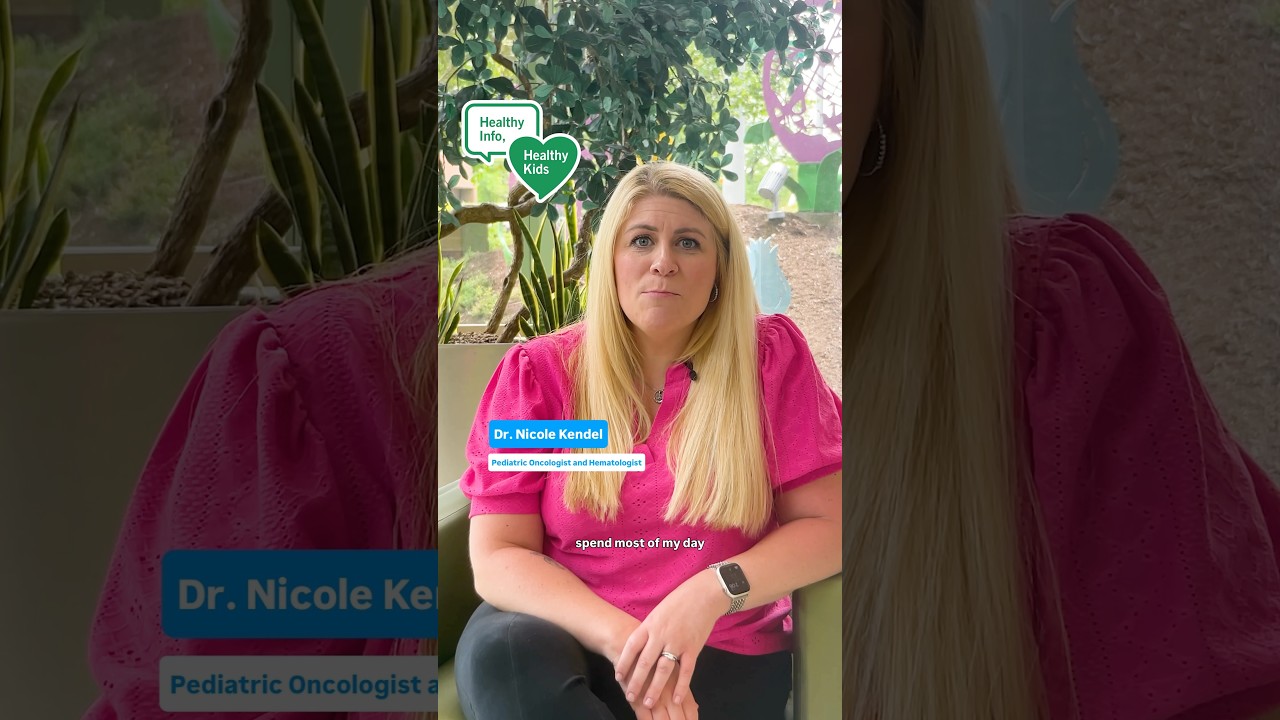
Nicole Kendel, MD, and mom of three
Director, Hemostasis and Thrombosis Center; Pediatric Hematologist-Oncologist
As the director of the Hemostasis and Thrombosis Center at Akron Children’s, Dr. Nicole Kendel leads the team that helps children with serious bleeding and clotting conditions. She’s also an assistant professor of pediatrics at the Northeast Ohio Medical University, where she shares her knowledge and expertise with future providers. And, she’s a mom, allowing her to live Akron Children’s promise to treat every child as she would her own.
Full Bio