A Magazine from Akron Children's

How one family found hope, healing and joy after a devastating mental health crisis.

When Jordyn handed her mother a perfume sampler for Mother’s Day this year, it may have seemed like a small gesture.
For Jordyn’s mom, Andrea, it meant everything. “There was a time when I didn’t know if we’d ever get here,” Andrea said.
Today, Jordyn is an 18-year-old business major at The University of Akron Wayne Campus. She enjoys spending time with friends, working and planning for the future. But just a few years ago, her family was navigating a very different reality — one marked by depression, uncertainty and fear.
Their journey through mental health challenges and recovery is one they now share openly in hopes of helping other families find strength, support and a path toward healing.
Throughout her childhood, Jordyn was social, active and deeply connected to the people around her. Then came a series of life changes that slowly altered her outlook.
Just before the COVID-19 pandemic, Jordyn experienced the loss of her grandfather. While his death wasn’t unexpected, Andrea says her daughter struggled to process the grief. Soon afterward, pandemic shutdowns brought isolation, remote learning and separation from friends.
“Her depression really started during COVID when everything went to home instruction,” Andrea said. “She’s a very social girl, and suddenly she couldn’t get out of the house. She was miserable.”
As the months passed, Jordyn began withdrawing from the activities and relationships she once enjoyed. She slept excessively, lost interest in things that had previously brought her happiness and faced social challenges after experiencing bullying at school.
“It was like her joy button was gone,” Andrea said.
Looking back, there were warning signs the family didn’t fully understand at the time.
“I could kick myself for missing the red flags,” Andrea said. “It should have occurred to me that she needed counseling earlier.”
According to Dr. Selena Magalotti, child and adolescent psychiatrist and Jordyn’s physician, depression can develop gradually in teens. It can be misinterpreted as typical teenage behavior, grief or physical concerns.
“Families may notice changes from their teen’s usual demeanor, like consistent changes in mood, increased sadness, decreased interest in activities they used to enjoy, becoming withdrawn or increased irritability,” she said. “Talking with your teen about how they are feeling, and seeking professional support when needed, can be very helpful.”
As Jordyn’s condition worsened, her struggles eventually escalated into serious mental health crises requiring intensive treatment and close supervision at home.
“At one point, we were simply fighting to keep her alive,” Andrea said.
The family eventually turned to Akron Children’s Partial Hospitalization Program (PHP) and Intensive Outpatient Program (IOP), where Jordyn received structured therapy, psychiatric care and ongoing support from a multidisciplinary team.
Initially, Andrea expected treatment to provide an immediate solution.
“I walked into Akron Children’s expecting a miracle,” she said. “I wanted to hand my daughter over to the professionals to be ‘fixed’ and had no idea how long and difficult the next few years would actually be.”
“It can be very challenging for families when their teen is struggling seriously with their mental health. Recovery can take time,” said Dr. Magalotti. “It’s important to work collaboratively with a trusted mental health team, maintain consistency in therapeutic interventions, and if indicated, medication treatment. It’s key to maintain hope and have patience in the process.”
Over time, Andrea learned that healing doesn’t happen all at once.
“It’s a slow, deliberate process that requires immense patience and hard work,” she said.
The experience also transformed how Andrea measured success. Rather than focusing on dramatic breakthroughs, she learned to celebrate small victories.
One of those victories came when Jordyn began reconnecting with her brothers.
“She started having normal conversations with her siblings again,” Andrea said. “Those little moments meant everything.”
“What may seem like small signs can be a great indicator of progress in treatment. Maybe your teen wants to watch TV with the family for a little bit, instead of lying down in their room all evening,” said Dr. Magalotti. “These are moments to be celebrated. Over time, small changes add up into meaningful recovery.”
Looking back, Jordyn said setting small, attainable goals had the biggest impact on her recovery.
“I really wanted to go back to public school, instead of being at home,” she said. “Once I reached that goal, I focused on getting good grades and eventually took some College Credit Plus classes.
“I also wanted to get my driver’s license and get a job,” she added.
Regular virtual sessions with her therapist also helped Jordyn apply what she learned in PHP and IOP to real-life situations. The sessions also helped her mom learn how to communicate with Jordyn in a more constructive, healthy and collaborative way.
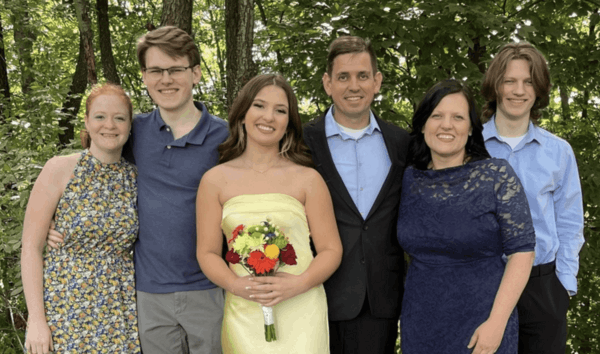
Today, Jordyn continues to attend therapy and access support services while building the next chapter of her life.
“She’s extremely artistic and science-minded,” Andrea said. “Maybe she’ll pursue a career in mental health one day; she’s certainly lived it.”
Jordyn has also discovered a newfound sense of independence. She enjoys working, earning her own money and making decisions about her future.
Andrea encourages other families to seek help early and trust the process, even when progress feels slow.
“Your child may not be ready to fully accept the therapy in the beginning, but the information is being planted,” she said. “Over time, those tools can make all the difference.”
She also wants parents to know they don’t have to face mental health challenges alone.
“Figure out who your tribe is,” Andrea said. “Put away your pride and admit you need help. It can be very hard on families and marriages, but support matters.”
Dr. Magalotti said one of the most important parts of treatment is having hope.
“I work with families on this every day and consider it the foundation of therapeutic treatment. I see amazing progress all the time, and it’s the reason I love the work that I do,” she said. “Being a part in helping kids go from struggling to thriving takes time and effort, but recovery is absolutely possible.”
For Jordyn, the future looks far different than it once did.
“There was a time when her future felt completely out of reach,” said Andrea. “Now she’s finding joy again — spending time with friends, driving, working and thinking about her future. What might seem like typical milestones to other parents are, for us, an answer to our prayers.”
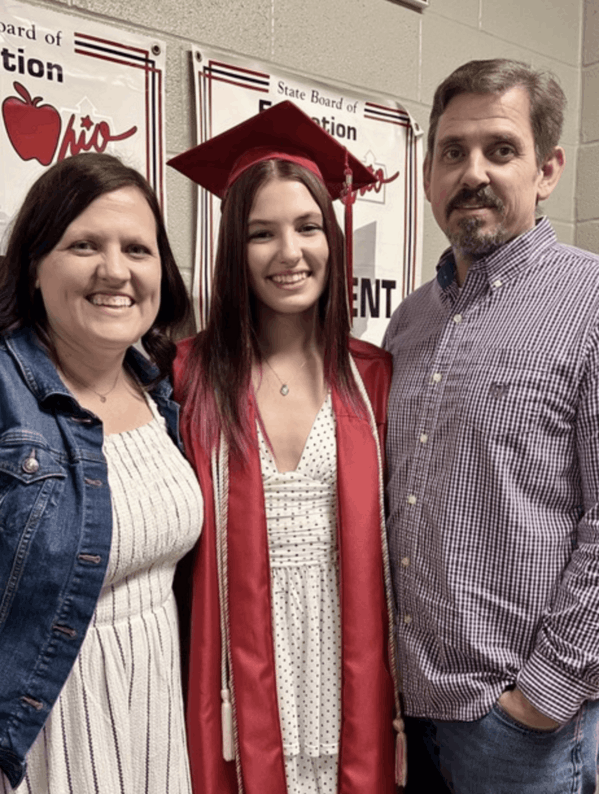
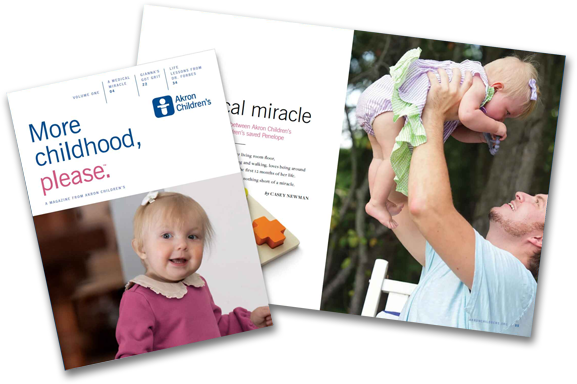
From inspiring stories, to medical miracles, the More childhood, please.® magazine will make you appreciate those precious 6,574 days of childhood.
SubscribeAkron Children's invites you to connect with us.


