A Magazine from Akron Children's

After life-changing brain surgery stopped her devastating seizures, Anna Cate is living proof of the brain’s remarkable ability to adapt.
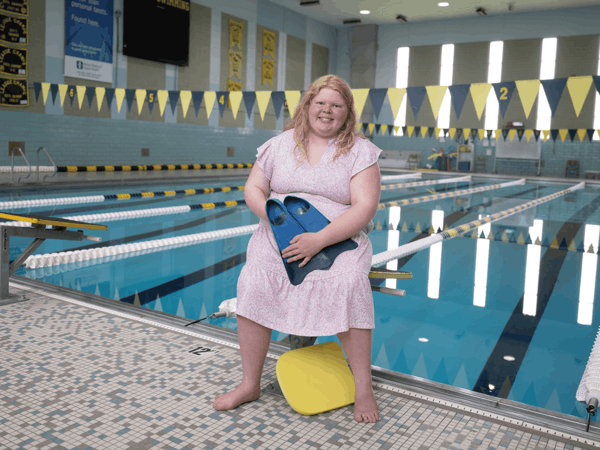
Looking back, Jon Dies can trace the signs all the way back to when his daughter was 3 years old.
One night, Anna Cate wandered into her parents’ bedroom unable to walk. “We thought her right leg had just fallen asleep,” he recalled.
Around the same time, she was slower to develop speech than other children her age. Jon and his wife, Elizabeth, had begun exploring possible interventions when everything changed.
Jon witnessed Anna Cate having a seizure during a nap and immediately called 911.
“The paramedics came and insisted on taking her directly to the hospital,” Jon said. “She didn’t have use of the right side of her body, and they were worried she may have had a stroke.”
Doctors ordered a CT scan largely as a precaution. What it revealed stunned everyone.
“Nobody felt like there was anything significantly wrong, but they wanted the CT to double check,” Jon said. “That’s when we got the shocking news that Anna Cate was missing 50% of her brain on the left side.”
Despite that discovery, Anna Cate had already adapted in remarkable ways.
“Doctors were shocked that she could walk and talk as well as she could,” Jon said. “Her brain had rewired itself to compensate. You never would have thought anything was catastrophically wrong. But looking back now, there were signs.”
According to pediatric epileptologist Dr. Chinasa Nwankwo, regular developmental screenings can help identify underlying neurological conditions before more serious symptoms emerge.
“During these screenings, we look for signs that both sides of the brain are working well together and that children are progressing along their curve,” she said. “Signs such as early handedness, delayed walking or challenges with maintaining eye contact during movement may indicate a bigger issue where intervention is needed.
For several years, medication kept Anna Cate’s seizures under control. But as she grew older, new concerns emerged. Learning became more difficult, and the side effects of medication began to take a toll.
Then, during a routine appointment with Dr. Nwankwo, everything changed again.
“Dr. Nwankwo told us to walk across the bridge to the hospital and go to admitting,” Jon recalled. “We did that, and Anna Cate was admitted to the Pediatric Intensive Care Unit.”
Doctors discovered she was experiencing prolonged seizure activity beneath the surface caused by “Electrical Status Epilepticus in Sleep (ESES).” This rare and severe form of childhood epilepsy can lead to cognitive, behavioral and language regression.
“With this condition, near continuous abnormal activity is noted during sleep, a time when most brains are working to reset, consolidate memories and prepare for ongoing learning,” Dr. Nwankwo explained. “If this process of recovery during sleep is disrupted, serious cognitive and behavioral regressions may be seen as well as ongoing language issues and/or loss of language.
“Prompt identification and treatment is crucial to halt the regression process and allow children the chance to have their brains grow and develop appropriately,” she added.
Anna Cate had to be placed in a medically induced coma to stop the seizures.
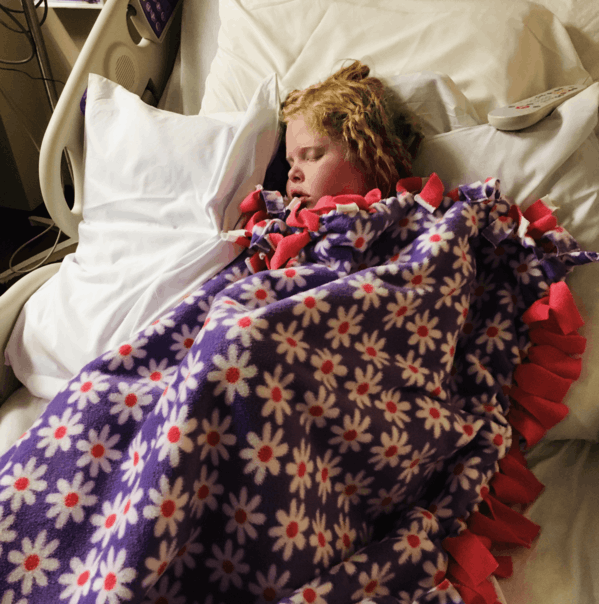
Anna Cate endured five brain surgeries and countless hours of therapy. She’s been seizure-free since 2019.

The family explored every noninvasive treatment option available. But because of the severity of Anna Cate’s condition and her age, surgery ultimately offered the best chance to stop the seizures and preserve her quality of life.
On June 3, 2019, she underwent a “left anatomic hemispherectomy,” a procedure that removed the remainder of the left side of her brain. Drs. Gwen Hughes and Tsulee Chen, Akron Children's neurosurgeons, performed the surgery.
Amid one of the most difficult seasons of their lives, the family found an unexpected source of comfort.
Jon’s lifelong best friend, Jake Sisko, happened to be a physician assistant on Dr. Hughes’ team and became part of Anna Cate’s care team.
“I’ve known Jake since kindergarten,” Jon said. “The world works in mysterious ways. He held Anna Cate the day she was born, and now he’s involved in her care.”
Recovery wasn’t measured in days, but in months of physical, occupational and speech therapy, where every regained skill represented another step forward.
Nearly six years after her hemispherectomy, Anna Cate remains seizure-free.
She has undergone five brain surgeries, including a shunt revision in 2025, but she has not experienced a seizure since 2019. She has successfully been weaned off all antiseizure medications.
Now a seventh grader at Highland Middle School, she continues to exceed expectations.
Jon credits both the school and his mother-in-law,
an educator who tutored Anna Cate after COVID-related learning disruptions, with helping her thrive
academically and socially.
Today, at 13, you would never guess everything she has endured simply by looking at her. Although she can’t use her right arm, she walks independently — something many doctors once believed might not be possible.
“She puts 80% of her body weight on her left side,” Jon explained. “Her brain rewired itself so she could walk.”
She also swims with her school’s swim program, an activity that has improved the range of motion in both her arm and shoulder.
“She walks a little slower, and she has a helper when needed at school,” Jon said. “Otherwise, she’s your typical teenage girl who loves Starbucks and Sephora.”
For her family, there’s nothing more extraordinary than that.
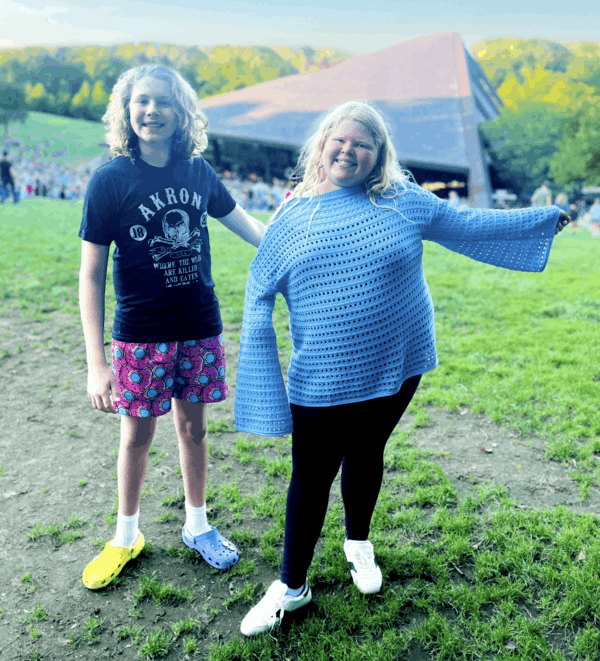
Anna Cate and her brother, Andrew, enjoy a night at Blossom Music Center.
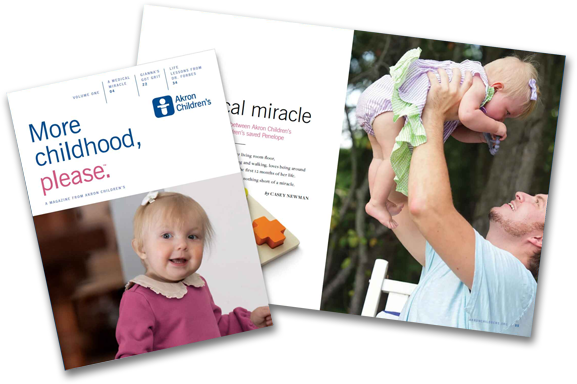
From inspiring stories, to medical miracles, the More childhood, please.® magazine will make you appreciate those precious 6,574 days of childhood.
SubscribeAkron Children's invites you to connect with us.


