
A Magazine from Akron Children's

When you meet her today, she’s a steady, confident presence in the Akron Children’s Pediatric Intensive Care Unit (PICU). Aliyah Torgler, BSN, RN, speaks with warmth, provides care with a focused purpose and carries a quiet understanding from her own personal experience. What most of her patients and their families do not know is that she once lay in an Akron Children’s PICU bed herself, exhausted and frightened.
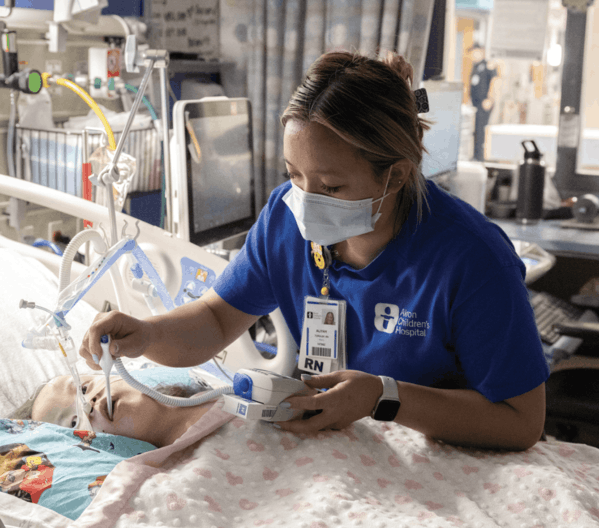
Once a PICU patient herself to now a PICU nurse, Aliyah Torgler, BSN, RN, cares for the next generation at Akron Children’s.
Aliyah grew up in Jackson Township after being adopted from China as an infant. She arrived in Ohio at just 10 months old with no medical records and no family history to guide her parents or pediatrician.
Her childhood was full of the usual joys such as school, having fun with friends and playing “nurse.”
“I remember using shoelaces as makeshift IVs or as bandages on my stuffed animals,” shared Aliyah.
During track season in eighth grade, Aliyah noticed she could not keep up at practice. She started sleeping more and had no stamina as the day progressed. Strange bruises appeared in places that didn’t make sense. Her mother noticed these changes first, sensing the excessive napping was deeper than teenage fatigue.
Aliyah’s pediatrician suspected hormones and suggested a visit to an allergy and immunology doctor. Her first round of tests and blood work was so alarming that the provider ordered a redraw. After the same results a second time, the provider concluded Akron Children’s would be better suited to help Aliyah.
“It was a Saturday morning when the phone rang,” said Aliyah, describing the prompt instructions given to her mother to drive north to Akron Children’s Hospital Emergency Room. By the time they reached Akron, Aliyah was in acute kidney failure.
Aliyah remembers the blur of that day with the rush to the PICU and the fear she might die. She learned the unfamiliar word “nephrologist,” which is a doctor who specializes in diagnosing and treating kidney conditions. Little did she know that her nephrologist, Shefali Mahesh, MD, would become a defining figure for her and her family.
“I remember thinking, ‘I don’t understand what’s happening,’” Aliyah said. “But I know it’s serious.”
Within hours she began “hemodialysis,” a medical treatment that supports filtering waste, toxins and fluid from a person’s blood when kidneys fail.
“Aliyah had shrunken and scarred kidneys; it was clear that she would not recover any function,” explained Dr. Mahesh. “Although she was scared, she was decisive and had a ‘let’s tackle this problem’ attitude. In hindsight, she had the makings of a PICU nurse back then too: staying calm in a crisis and a desire to find a solution.”
Dr. Mahesh explained dialysis and how it would be a bridge to a transplant. “This is important to convey, especially with children, so they know from day one that we are working toward the goal of getting them off dialysis and to a transplant,” she said.
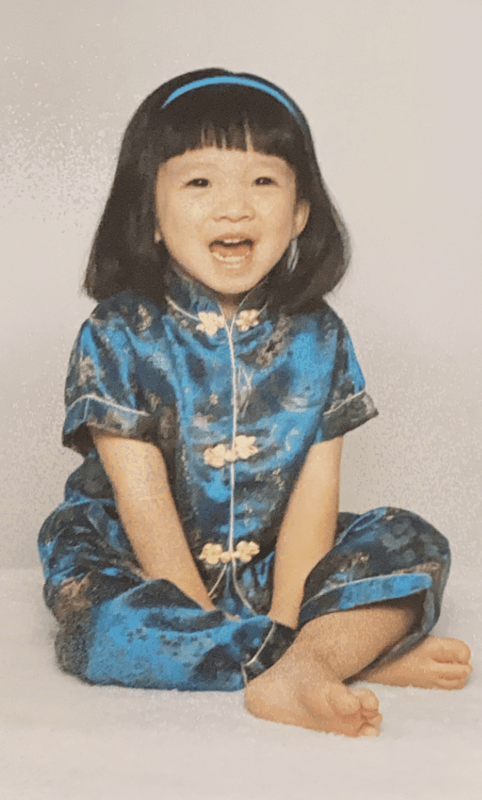
Aliyah grew up in Jackson Township after being adopted from China as an infant. She arrived in Ohio at 10 months old with no medical records or known family history.
Aliyah remembers the protocols during dialysis and transplant time being firm with rules such as no new pets for the family, undergoing psychological evaluations, home inspections and endless amounts of blood draws and lab appointments. “At age 13, I learned a whole new vocabulary that included dialysis, transplant, phosphorus and potassium,” she shared.
She endured a year of machines, tubing, sterile routines and responsibility. Her parents helped with logistics, but Aliyah eagerly learned how to set up her dialysis herself. She recalls meticulously washing her hands and learning each step.
“Always being intrigued by the medical field, I would research and look things up on my own,” she said. “Looking back, I learned a lot at a very vulnerable stage of life.”
As time passed, Aliyah missed being a freshman high school student and felt her world narrow into a series of medical appointments, dietary restrictions and the long wait for a transplant. A bright memory was when her closest friend, McKenna, and her mother stopped by for a surprise visit. Teachers expressed their care and encouragement via a school tutor who came to the house. Aliyah said her care team became an extension of her family.
In November 2015, after a very active donor search, the call came that there was a living donor match. It was an acquaintance; someone connected to her family stepped forward.
After receiving the news, Aliyah and her mother prepared to travel to Cincinnati Children’s. Through a collaboration between Akron Children’s and Cincinnati Children’s, the Cincinnati specialists performed the transplant Nov. 17, 2015. She returned to Akron Children’s just eight days later.
“It is impossible to put into words what that gift meant,” Aliyah said. “It gave me my life back. I will never be able to thank this person enough. Because of this donor, I graduated high school and attended college ‘on time.’”
Recovery was slow and steady. By the start of her sophomore year, Aliyah began to feel like a teenager again. She returned to school and started to imagine what the future may hold. Her experience affirmed her decision for a future profession in health care.
“I spent years watching nurses do more than care for a patient,” said Aliyah. “They care for a whole family.”
Aliyah remembers the providers and nurses who were gentle when she was scared, patient when she was overwhelmed and present in ways that mattered. Aliyah knew she wanted to be that for someone else.
While attending nursing school at The University of Akron, she also participated in the Akron Children’s Assuring Success with a Commitment to Enhance Nurse Diversity (ASCEND) clinical internship program as a nurse tech. She eventually found her way back to the PICU, serving in a unit she once spent many days in as a patient.
Today, Aliyah brings a perspective few clinicians have. She knows what it’s like to be the child in the bed. She knows what if feels like to have a worried parent at the bedside. And she knows what it means to have a team that refuses to give up on you.
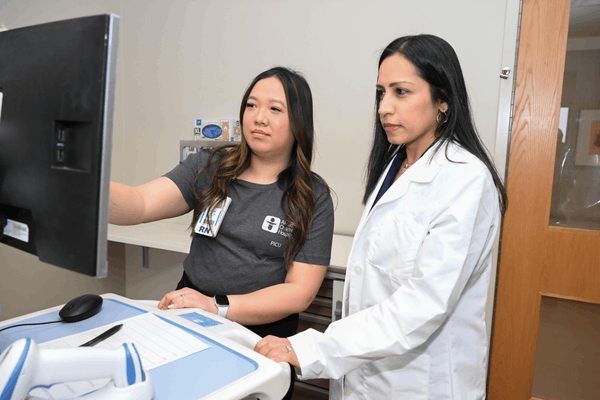
Once her nephrologist, now her colleague, Dr. Shefali Mahesh and Aliyah share a meaningful bond on the same care team.
“Our relationship has evolved from doctor and patient to now being on the same care team,” said Dr. Mahesh, who has worked with Aliyah to care for one kidney patient in the PICU so far. “She is my only patient who is now a caregiver at Akron Children’s. This is so unique.”
Aliyah’s life now is full of work in the PICU, exploring new restaurants, being active with her dogs, Benny and Stetson, and planning her upcoming wedding with her fiancé, Derek. Her dear friend from middle school who knocked on her door during a challenging time, McKenna, will serve as her matron of honor during one of the happiest days of Aliyah’s life.
As Aliyah reflects on her journey, she is overwhelmed with gratitude and all those who shaped her childhood and future: her donor, parents, friends, nephrology team and Dr. Mahesh.
To those children and their families waiting for transplants, she offers a message only someone who lived it can give:
“I see you, and I know how hard it is. Life will look very different one day, and it is worth the wait.”
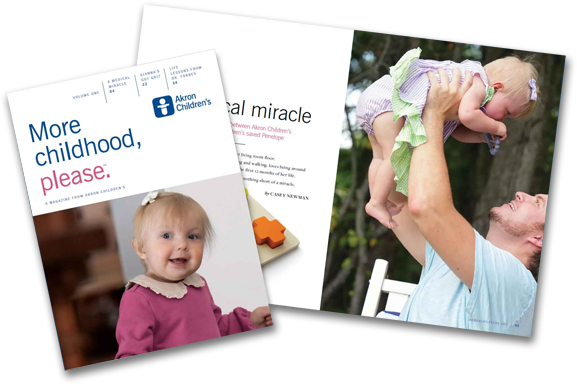
From inspiring stories, to medical miracles, the More childhood, please.® magazine will make you appreciate those precious 6,574 days of childhood.
SubscribeAkron Children's invites you to connect with us.