
A Magazine from Akron Children's

Though rare, the “hemoglobin SD” type of sickle cell disease has touched the Varner family of Akron. Twice. The oldest sibling, 12-year-old Carson, does not have the inherited condition. But his younger siblings — 9-year-old Benny and 6-year-old Elliott — are affected.

Sickle cell disease affects red blood cells, which are normally round and flexible. People with sickle cell disease have red blood cells that are hard, sticky and shaped like a farm tool called a sickle. Those with hemoglobin SD inherit both hemoglobin proteins S and D. The abnormally shaped cells can clump together, blocking blood flow and oxygen to the body. Symptoms include pain, anemia, organ damage — and complications can lead to fatigue, infections and strokes.
Benny was the first Akron Children’s patient to receive care for the hemoglobin SD type of sickle cell disease. “After Benny, we only had a 25% chance of our next child being born with sickle cell disease,” the kids’ mom, Brittany, said. “I guess we got the bad odds because Elliott was born with it. We found it at her newborn screening.”
Prasad Bodas, MD, hematologist-oncologist and director of the Akron Children’s Sickle Cell Program, had already been treating Benny. Elliott became his patient when she was just 2 months old. “I care for quite a few siblings who are impacted by sickle cell disease,” Dr. Bodas shared. “Working with Benny and Elliott — and getting to see them together during appointments — is doubly rewarding.”
As Benny’s symptoms worsened, Dr. Bodas recommended a special blood test that looks at proteins found on cells in the body. Finding a match for a bone marrow transplant can potentially cure someone with sickle cell disease. Even though Benny had more severe symptoms, Dr. Bodas also wanted to test Elliott. She didn’t have pain episodes like her brother, but she battled lung complications and had her spleen removed at age 3.
Carson, Benny and Elliott got tested. Carson, the unaffected sibling, matched Elliott but not Benny. Brittany and her husband, Vicktor, discussed what to do about getting Carson’s bone marrow harvested for Elliott.
“A bone marrow transplant has risks and can be fatal for the recipient. It wasn’t like Elliott was in a life-or-death situation and needed the transplant to survive,” Brittany shared. “We talked about waiting to see if her symptoms worsened, but we didn’t want to wait too long and miss the window of opportunity. We discussed options with Dr. Bodas and his team. He gave us the confidence to proceed with the transplant.”
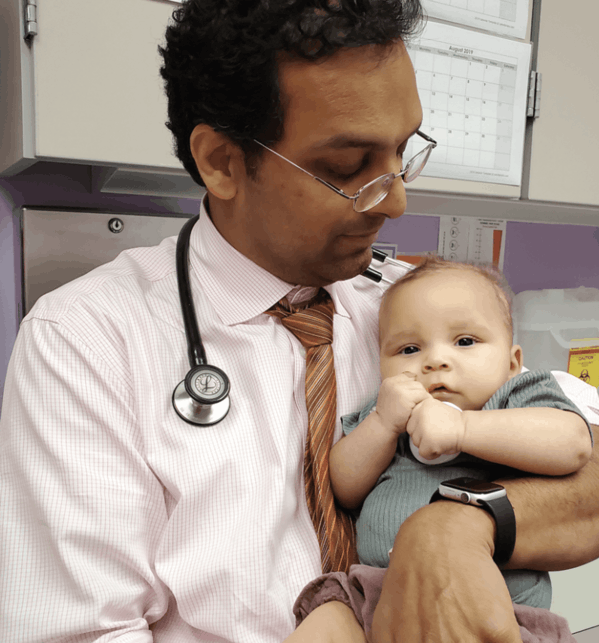
Dr. Bodas cuddles baby Elliott at one of her first sickle cell appointments.
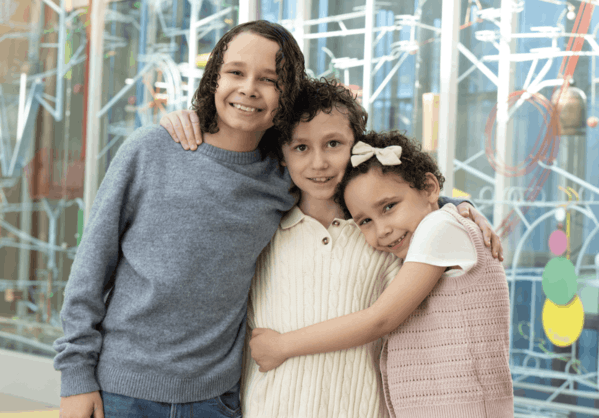
Carson, Benny and Elliott love life — and each other.
Elliott underwent extensive testing to reduce her risk of transplant complications. Blood work, echocardiograms, electrocardiograms, a chest X-ray and urine tests gave the transplant team a baseline of how Elliott’s organs functioned.
Afterward, Elliott was admitted to the hospital for chemotherapy. “We had to destroy her immune system to get her body ready to accept Carson’s bone marrow,” said Courtney Culbertson, MSN, APRN-CPNP-AC, CPHON, BMT-CN, hematology and oncology nurse practitioner on the bone marrow transplant team. “By eliminating her cells, that reduces the probability of the sickle cell disease returning.”
Dr. Bodas, Courtney and the transplant team harvested Carson’s bone marrow on May 6, 2025. The next day, Elliott received Carson’s bone marrow via infusion. But she wasn’t out of the woods just yet.
Because Elliott’s body had to rebuild its immune system, she spent more than a month in the hospital. Brittany, Vicktor and any clinicians entering the room wore masks — and Elliott couldn’t leave her hospital room. “She wanted to go outside and play like a regular kid,” Brittany said. “It was a hard time for the whole family. Vicktor still had to work, and we have Carson and Benny to take care of. My brother, Dewey, lives with us — and he was a big help.”
To pass the time in her hospital room, Elliott played doctor, makeup artist and stylist. She put a schedule on her door, offering checkups and makeovers for nurses. She “dressed to impress” and had clothing competitions with the nurse practitioners.
“Elliott did awesome with the bone marrow transplant, and she handled the entire situation with grace,” Courtney shared. “She brought a smile to our faces each day.”
The high risk of infection impacted what Elliott could eat. In addition, some foods didn’t taste the same after chemotherapy. She had a nasogastric tube (NG tube) for feeding for three months after the transplant to ensure she received enough calories and fluids. She had to avoid fresh vegetables — especially ones like lettuce that are hard to wash — and restaurant food.
Elliott finally got to go home in June 2025. “It was tough at first with the tube feedings, all the medication and her sense of taste being off from the chemotherapy,” Brittany shared. “We had to keep her away from crowds and neighborhood kids, so it was an exhausting and lonely time.”
Although she still struggles with the taste of meat, Elliott enjoys her favorite foods that include blueberries, strawberries, cucumbers and Taco Bell cheese rollups. She went back to school this January.
Before Elliott lost her long hair due to chemotherapy, Dr. Bodas would style it at her medical appointments. “I used to braid her hair, building my skills because I have a daughter,” Dr. Bodas said with a smile. “I now tell Elliott that her short and wavy hair looks like her favorite provider — me!”
Elliott gets regular blood tests, and the sickle cell team continues to monitor her. “The biggest risk of bone marrow rejection or the return of hemoglobin SD disease is during the first year after transplant,” Brittany said. “We’re coming up on the one-year anniversary, and at this point, she has no signs of the disease. Elliott is cured, thanks to Carson being a perfect match. We’re so thankful!”
Although Benny couldn’t get a bone marrow transplant, there’s still hope. Akron Children’s Hematology and Oncology earned Foundation for Accreditation of Cellular Therapy (FACT) accreditation in 2025. This accreditation allows Akron Children’s to offer additional treatments including gene therapy. Benny will be eligible for gene therapy when he’s 12, and successful treatment could greatly improve his quality of life.
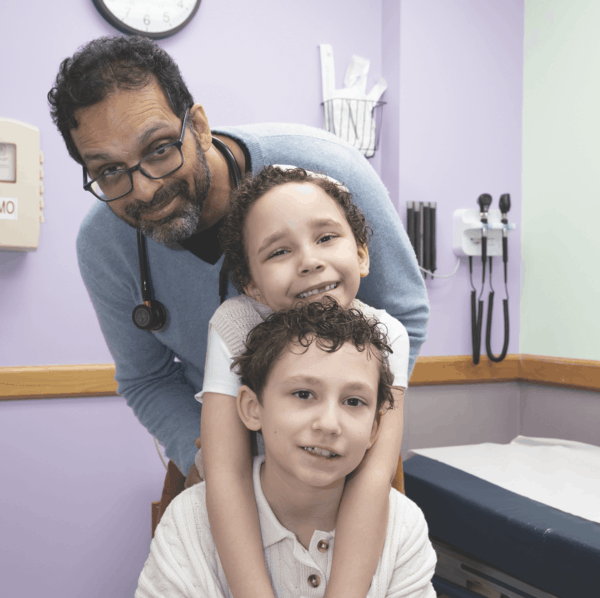
Dr. Bodas gets a double reward in caring for Elliott (center) and Benny.
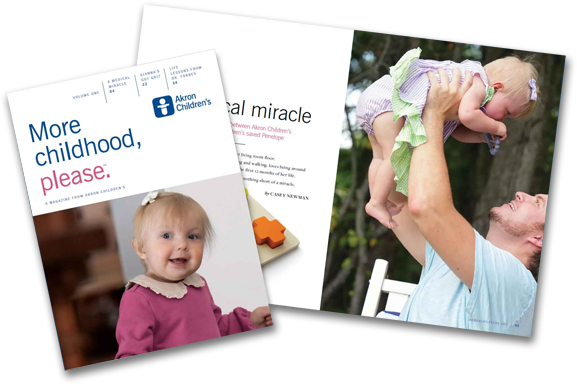
From inspiring stories, to medical miracles, the More childhood, please.® magazine will make you appreciate those precious 6,574 days of childhood.
SubscribeAkron Children's invites you to connect with us.