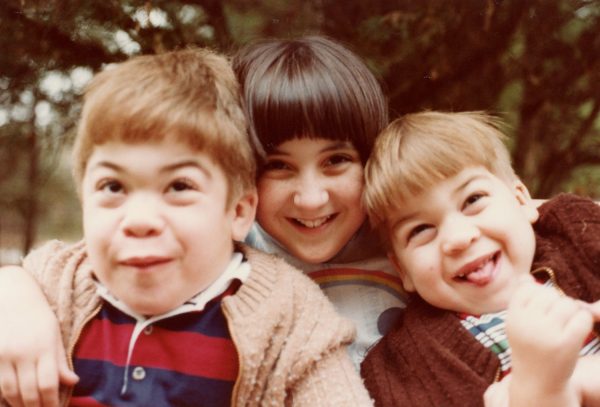
“Kenny arrived when I was 2 and a half years old,” she said. “He was diagnosed as having some kind of ‘dwarfism’ and did not acquire verbal and motor skills on time. He had a large abdomen with a hernia and a large head.”
Dr. Gotkiewicz enjoyed playing with Kenny in his crib and strolling next to the baby carriage while on walks through the neighborhood. As he aged, Kenny followed his big sister everywhere.
How Hunter syndrome affected her brothers
“When we finally got Kenny’s Hunter syndrome diagnosis, Kevin was about to be born,” she said. “I remember Mom coming home from the hospital after Kevin arrived, and I felt like everyone was quiet and serious.”
Also called “mucopolysaccharidosis type 2,” Hunter syndrome impacted the ability of Kenny and Kevin’s bodies to digest certain sugar molecules properly. These molecules built up in their tissues and organs, causing damage that affected their physical and mental development. “Kenny and Kevin had more struggles as they passed the age of 2,” Dr. Gotkiewicz shared. “They struggled to gain new skills and went to a special school.”
The sibling experience
Dr. Gotkiewicz noticed her brothers didn’t talk or learn like she did. She played school with them often, thinking she could work hard to help them catch up. “Most siblings of kids with rare diseases are very protective of their families and their parents by nature,” she explained. “The siblings tend to be the ‘strong personalities’ who don’t need help. And most parents are defensive by nature about how they provide comfort and space for the ‘normal’ sibs.
“It’s a dynamic that tends to cause the sibs to just plow through,” she continued. “Then they realize later in life that they dealt with some very big emotions as young kids they never processed.”
Dr. Gotkiewicz went to countless doctors’ appointments with her brothers and babysat them often after school. Although she felt sad that she couldn’t go to dance class or gymnastics like her friends, she felt lucky that Kenny and Kevin loved to play with her.
Depending on the severity, Hunter syndrome can cause life-threatening breathing issues, heart disease and decreased brain function. “Kenny died at age 13 when I was a sophomore in high school. Kevin also died at age 13 during my freshman year at Tufts University,” she said. “I missed their smiles, giggles and hugs – but I felt grateful they were no longer in pain.”
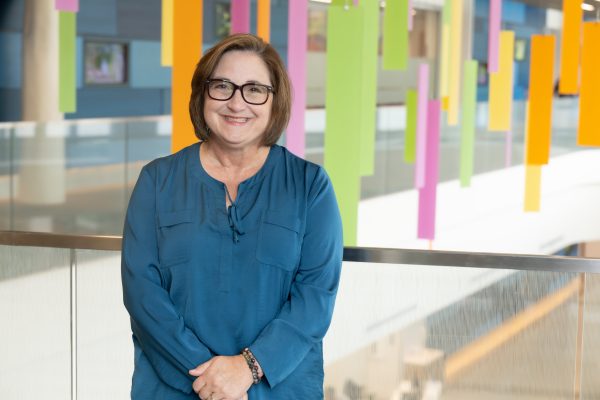
Dr. Dawn-Marie Gotkiewicz
Tips for siblings of kids with rare diseases
Every family’s situation is different. The siblings’ ages, birth order, type of rare disease, degree of medical complexity, economics, support systems and culture all play a role in family dynamics. But here are some common themes Dr. Gotkiewicz offers:
Keep the siblings in mind. Allow them to share their feelings and validate them! Answer and encourage questions.
Although there will be challenging times, the siblings are learning so much about empathy, caregiving, love and kindness. “I know so many people who have gone into medicine due to personal experience like having a sibling with a chronic condition,” Dr. Gotkiewicz said.
Seek help through support groups and counseling. Even if the sibling seems “fine,” they can use some extra support.
Let them know they could find challenges later in life, as early experiences can influence adult emotions.
Check out the movie “Wonder,” which does a great job depicting the sibling of a child with a rare disease.
“The most important thing to me is that siblings are given a voice and a safe space to ask questions and discuss frustrations,” she said. “I also encourage families to talk about the amazing life experiences they are having as well! Although my brothers passed away, they’re still an important part of my life. We had pictures of them at my daughter’s wedding, for example, reminding me that I have special angels that guide me.”
Inside Children’s is an online community that provides inspirational patient and staff stories as well as information about health and parenting, hospital news, fundraising events and more.