Shared decisions ensure Lexi’s bright future after heart surgery
Heather Bauders, Managing Editor
Lexi is back to living an active, healthy life after surgery to repair a heart defect.
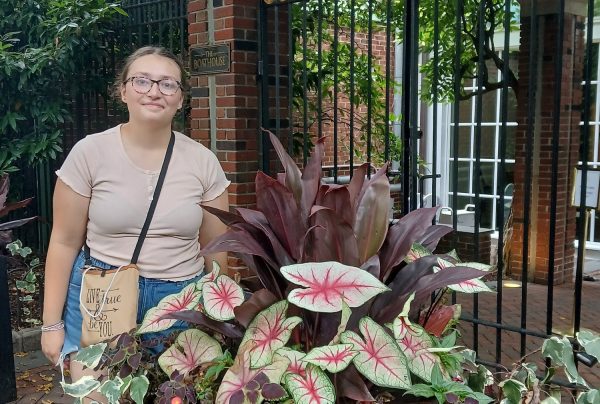
Lexi Kormanec is a 15-year-old sophomore at Nordonia High School. She loves roller coasters, singing and talking with her friends. To see her, you wouldn’t know she had a heart defect that required major surgery when she was 13 years old.
Early detection of a heart issue
Recommendations from family members led Lexi’s parents, Elizabeth and Steve, to choose pediatrician Dr. Mark Evans from Akron Children’s Pediatrics in Brecksville. When Dr. Evans visited newborn Lexi in the hospital, he detected a heart murmur. He waited until her first office visit to listen to her breathing again and confirm. “He told Steve and me that he thought he heard something that didn’t sound right, like a murmur,” Elizabeth said, “and referred us to the Akron Children’s Heart Center.”
After many tests, the Kormanec family found out that Lexi was born with a heart defect called “bicuspid aortic valve.” This means the valve in her heart has two flaps instead of three, which can cause the valve to leak. She also had a “dilated ascending aorta,” which is an enlargement in the top part of the aorta that carries blood from the heart to the rest of the body. This enlargement can weaken the aorta in this area and lead to complications including rupture and dissection.
Lexi saw Pediatric Cardiologist Dr. Ira Taub every year to monitor her valve and blood leakage. “Dr. Taub is kind, gentle and understanding,” Elizabeth said. “He drew pictures to help us understand, and he answered every question we had.”
The game plan was for Lexi to get an MRI after puberty, around age 13, when her heart completed most of its growth. However, during her June 2022 appointment shortly after turning 12, Dr. Taub suggested getting the MRI early. She had the test 5 months later.
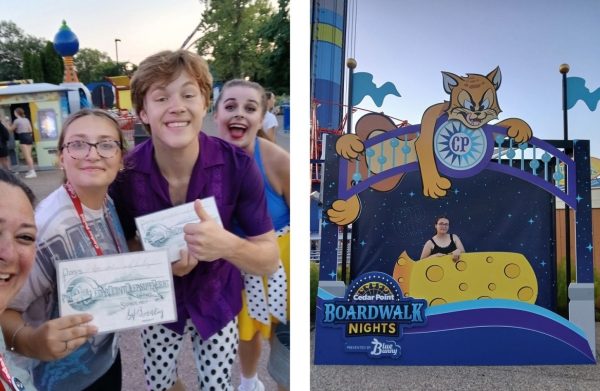
Lexi loves her place of summer employment: Cedar Point. She’s pictured here with mom (left) and Cedar Point performers.
Time for heart surgery
The Heart Center team determined Lexi needed surgery sooner rather than later. “I never got to the point where I expected her to have surgery because she was cleared at every appointment,” Elizabeth said. “I’m glad Dr. Taub recommended getting an MRI when he did. Getting more precise results allowed us time to plan for a surgery in lieu of the procedure being an emergency.”
Dr. Robert Stewart, chief of cardiothoracic surgery, met with the Kormanec family. “He explained why surgery was so crucial, and he answered of our questions,” Elizabeth shared. “Although the blood leakage was at the high end of the normal range, Lexi’s biggest problem was the left pumping chamber was significantly enlarged. Also, her aorta above the valve was quite enlarged.”
Before Lexi’s surgery took place, it was really hard on everyone. It was especially a hard time for her younger sister Cecilia (aka Ceci). “Although it was such a complex defect to understand as a fourth grader, I knew I wanted to help in any way I could,” Ceci said. “Around the time of Lexi’s surgery, I thought of an idea to take her journey of having this surgery into a fantasy book that I had to write as a final project at the end of the year.” Ceci gave the book she made to her sister after everyone returned home, and Lexi was overjoyed to see the amount of effort Ceci put into making the book to show that Lexi isn’t alone.
Lexi had great support before, during and after surgery – including her family, friends and Akron Children’s care team.
Shared decision-making process
For a surgery like Lexi’s to replace the aortic valve, mechanical and bioprosthetic valves are options. Each type carries its own risks and benefits. “Mechanical valves last longer, but the patient needs blood-thinning medicine for the rest of their life,” Dr. Stewart explained. “This can put a baby at risk when the woman is pregnant and increase her chance of bleeding. A bioprosthetic valve is made of animal tissue, and although it doesn’t last as long, it doesn’t require blood thinner.”
Lexi may want to have kids down the road, making the bioprosthetic valve the best option. “The choice of valves highlights the shared decision-making process among the medical team, Lexi and her parents,” Dr. Stewart said. “We discussed the options that would deliver the best outcome for Lexi’s current and future needs.”
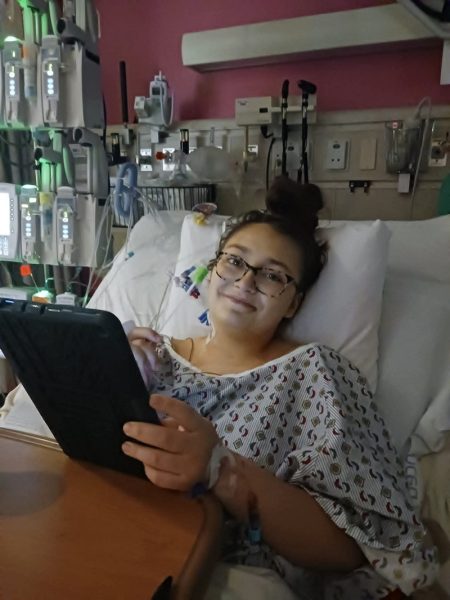
Dr. Stewart replaced Lexi’s aortic valve with the bioprosthetic one. He also replaced her oversized aorta with a tube graft, which is a synthetic fabric. During Lexi’s surgery, her family gathered in the hospital waiting room and kept other relatives updated with calls and texts. The family also prayed in the hospital chapel.
Meeting milestones
Kids are resilient, and Lexi recovered quickly. She went home from the hospital just 3 days after open-heart surgery. “I couldn’t rollerblade or do any physical activity while I healed,” she said. “I passed recovery goals and got cleared for normal activity in September 2023, which meant I could go back to rollerblading.”
Lexi’s aortic valve could last anywhere from 10 to 25 years. As she grows up, she can stay with Akron Children’s through the adult congenital heart program. “We pray Lexi won’t have any issues with her new valve until at the earliest her late 20s or possibly after her first pregnancy,” Elizabeth said. “We’re hoping for many more years, but as every case is individual, we really don’t know.”
Lexi loves to sing and has attended a special camp for a cappella singers.
Loving life
Lexi breathes better since her surgery, and it’s safe to do activities she enjoys. “I work at Cedar Point now. It’s great to be around the roller coasters and then be able to ride them after my shift ends,” she said. “Over the summer, I also participated in my second Camp A Cappella in Dayton, Ohio.”
She takes advanced placement classes and plans on becoming a doctor or nurse. She’s grateful to the Akron Children’s Heart Center team for giving her a bright future. “They really helped me understand everything that was happening with my heart, including surgery,” she shared. “And they were really nice, too.”
Inside Children’s is an online community that provides inspirational patient and staff stories as well as information about health and parenting, hospital news, fundraising events and more.