Transnasal endoscopy (TNE) transforms testing for gastroenterology patients
Heather Bauders, Managing Editor
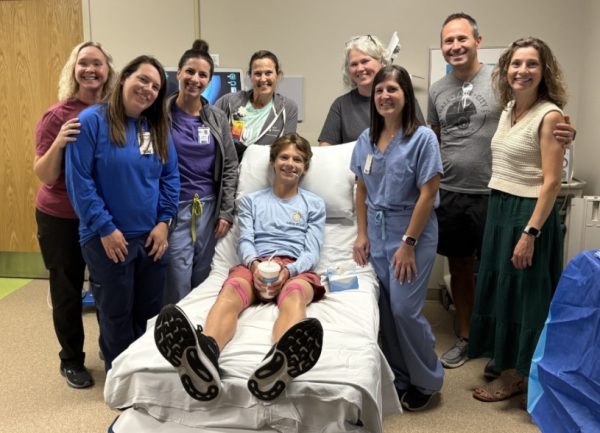
Jackson; his parents, Michael and Laura (far right); Dr. Christine Pasquarella (between Jackson and Michael); and the Gastroenterology team celebrate his successful TNE.
Jackson Mead of North Canton, age 16, is on his high school robotics team and loves to figure out how things work. When he became the first Akron Children’s patient to undergo the TNE procedure, which doesn’t require anesthesia like a traditional “upper endoscopy,” he excitedly asked a lot of questions.
Stomach issues start
Jackson started having stomach trouble 3 years ago. He also stopped gaining weight and growing for about a year. “Our family members are slight people – we’re not big,” his mom, Laura, shared. “I thought Jackson just hadn’t hit a growth spurt. But he didn’t feel well a lot of the time, so I made an appointment with Akron Children’s Gastroenterology.”
Laura and Jackson met with Dr. Christine Pasquarella, pediatric gastroenterologist. “We tried a few medicines first to see if his issue was related to reflux,” Laura said. “He didn’t improve after a few weeks, so the next step was an upper endoscopy.”
This procedure uses an endoscope – which is a long, thin and flexible tube with a light and camera on it. The doctor gently puts the tube in the patient’s mouth and down the throat to check for problems in the esophagus, stomach and the upper part of the small intestine. The patient is asleep under general anesthesia during the procedure.
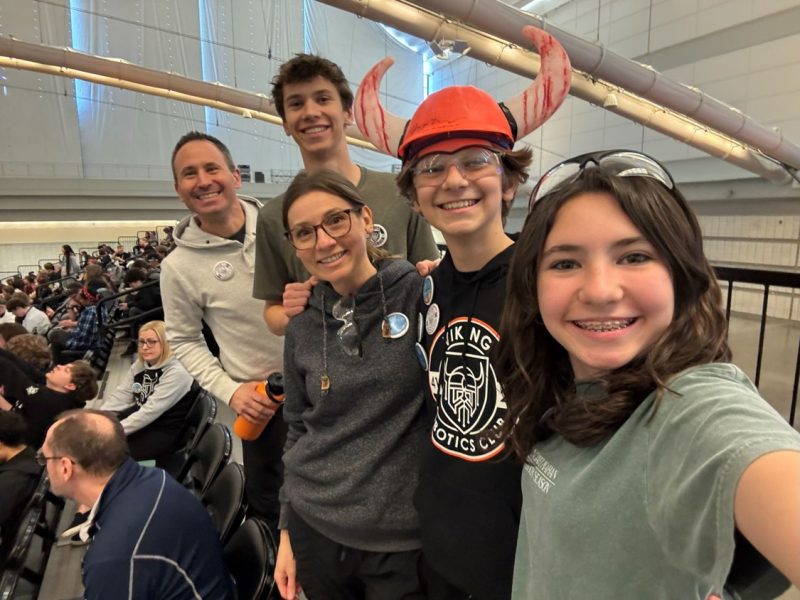
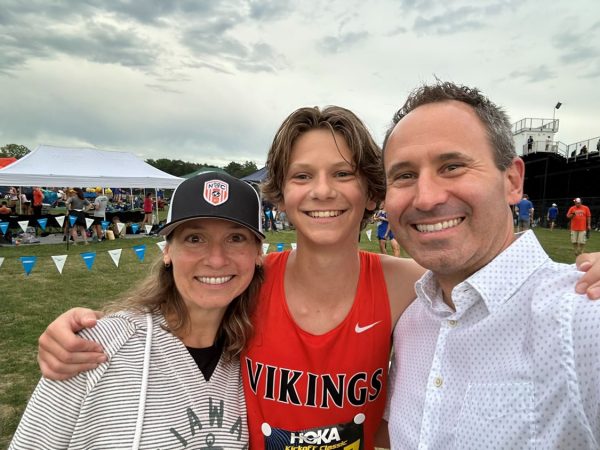
Jackson, wearing his Hoover High School Vikings hat, attended a robotics competition in Pittsburgh earlier this year: He drives the robots his team builds. Also pictured are his parents; brother, Benjamin; and sister, Emma.
The diagnosis
After his first upper endoscopy in February 2024, Jackson learned he has “eosinophilic esophagitis (EoE).” It’s an inflammatory condition caused by too many of a certain type of white blood cell, which is thought to be caused by a chronic food allergy. The esophagus gets inflamed and irritated – causing symptoms such as stomach pain, nausea and trouble swallowing. These problems can lead to less eating and less nutrients that help the body grow.
Treatment options for EoE include medications or dietary management. Dr. Pasquarella started Jackson on an elimination diet to see what food triggers might contribute to the EoE. “Traditional blood or skin tests for food allergies do not correlate with food allergens that trigger EoE,” she explained. “Several main food groups can be the culprit for EoE. We determine food triggers by process of elimination and follow-up endoscopies after at least 8 weeks to see if there’s any improvement.”
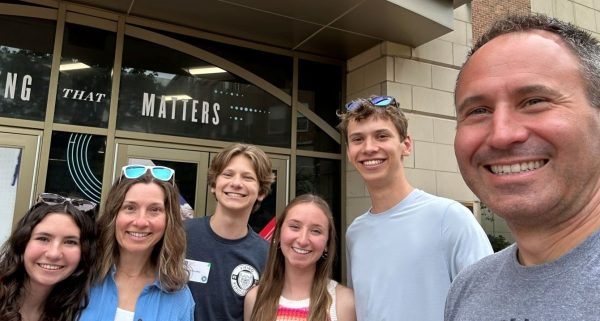
The Meads accompanied Jackson to engineering camp at the University of Dayton.
‘Quite a journey and process’
Some patients choose to eliminate one food group at a time – with dairy being the most likely trigger – or remove multiple foods at once. “Jackson chose to eliminate the top 3 – dairy, wheat and soy – and then had a repeat endoscopy 8 weeks after to ensure that his EoE was treated and under good control,” Dr. Pasquarella said. “After his repeat endoscopy showed that his EoE was being treated well, he added soy back into the diet while continuing to eliminate dairy and wheat. He then required another endoscopy to reevaluate.
“This process gets repeated with each food elimination or reintroduction,” she continued. “Most patients only have one food trigger, but both dairy and wheat trigger Jackson’s EoE.”
He had 5 upper endoscopies in a year. “I know sick kids at the hospital go through a lot more,” Laura said. “But each of Jackson’s tests meant a day off school, being put under anesthesia, having the procedure in the operating room (OR) and then recovering. It was quite a journey and process.”
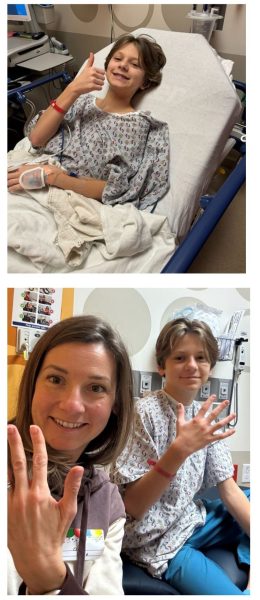
Jackson had 5 upper endoscopies in a year.
New technology makes endoscopies easier
Then, Dr. Pasquarella let Jackson know of a new option. Through a generous grant, Akron Children’s purchased transnasal endoscopy equipment to perform TNE procedures where a thinner, more flexible endoscope goes through the nose and doesn’t require anesthesia. “It’s a newer, innovative and less invasive way to evaluate how patients who need multiple endoscopies respond to treatment,” she said. “Because patients aren’t put under general anesthesia, they can return to normal activities like work or school right after the procedure.”
Dr. Pasquarella and the gastroenterology team explained the TNE to Laura and Jackson. “They painted such a nice, realistic picture. They walked us through what would happen and how Jackson would feel,” Laura recalled. “Jackson wants to learn about stuff, and he asked a lot of questions. He felt prepared, and so did I. The TNE only took a few minutes, and the whole experience was awesome.”
Laura also appreciates the comprehensive care Jackson received. “We met with an Akron Children’s dietitian, which was a resource we didn’t know we needed,” she said. “We also saw an endocrinologist to make sure there wasn’t anything else going on from a growth standpoint. The Akron Children’s team checked into things we didn’t know or think of during that stressful time.”
In addition to being on the robotics team, Jackson runs cross-country.
Growing and thriving
Since removing dairy and wheat from his diet, Jackson feels a lot better. He’s on the cross-country team and looking at colleges. “It’s been a big lifestyle change, but he’s been a super good sport,” Laura shared. “He just wanted to feel better, and he’s made great strides pretty quickly.”
Dr. Pasquarella is pleased with Jackson’s improvement, too. “It has been a pleasure taking care of Jackson and his family over the past few years,” she said. “Seeing the progress with his EoE diagnosis and treatment has been rewarding. Having the opportunity to perform the TNE and take Jackson’s feedback – comparing the upper endoscopies in the OR to the TNE experience in an exam room – has been valuable.”
Does your child need a gastroenterology appointment? We provide a variety of scheduling options.
Inside Children’s is an online community that provides inspirational patient and staff stories as well as information about health and parenting, hospital news, fundraising events and more.