Akron Children’s researchers discovered a worrying trend after Ohio made recreational cannabis legal. Many more young kids are accidentally eating cannabis products, and some are getting so sick they need to stay in the hospital.
The researchers studied data the Ohio Poison Control Center collected from January 2018 to December 2024. They found 5,387 cases of cannabis exposure — with 34.8% being kids under 6. The most surprising part was a 13-fold increase in cases of young children — from 47 in 2018 to 612 in 2024 — after Ohio legalized recreational cannabis in November 2023.
Among those 5,387 exposures:
95.3% were ingestions.
99.9% unintentional.
61.4% required hospital admission.
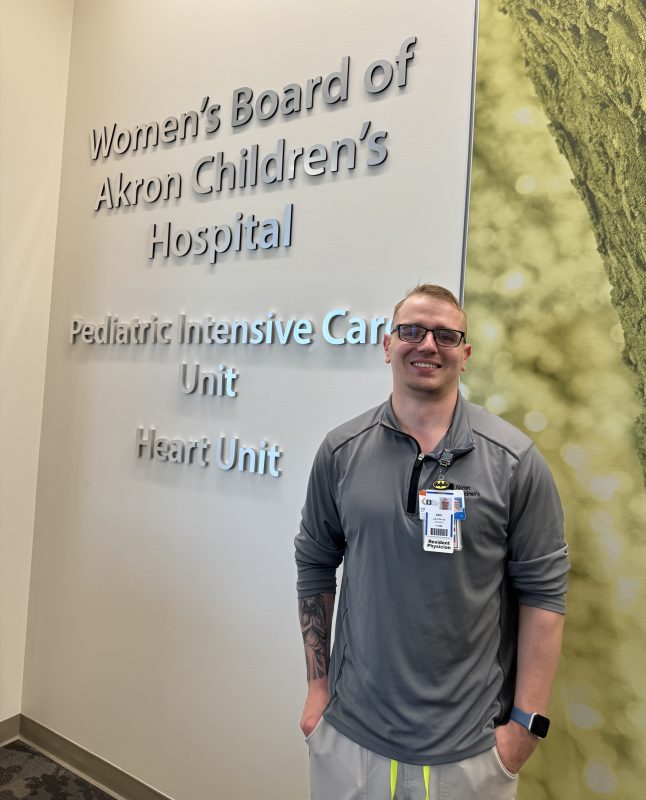
“A lot of these products, like gummy bears and brownies, are foods that look very intriguing to children,” said Dr. Eric Ligotski, a second-year pediatrics resident and the principal investigator. “And children don’t know what are in these products, so they just eat more and more. Adults know how to eat a safe limit, but kids do not.”
Dr. Ligotski, who plans a career in pediatric critical care medicine, has seen some of these effects himself during rotations in Akron Children’s Emergency Room (ER). When kids get too much cannabis, their central nervous system can slow or their heartbeats can speed up. They may throw up, lose their balance or become restless. In serious cases, they could have a seizure or have trouble breathing.
Published study
The journal Pediatrics Open Science published the study, titled “Temporal Association Between Cannabis Legalization and Intoxications in Ohio: A Statewide Poison Control Database Retrospective Cross-Sectional Analysis.”
Others joining Dr. Ligotski as authors on the study are: Michelle Bestic, PharmD; Sheila Goertemoeller, PharmD; Alysha Currie, MSN; Jonathan Colvin, BSN; Shan Yin, MD, MPH; Hannah Hays, MD; Danielle Maholtz, D.; Michael T. Bigham, MD, MBA; Sara Z. Rush, MD; Michael L. Forbes, MD; Jonathan H. Pelletier, MD, MS.
The American Academy of Pediatrics invited Dr. Ligotski to present the study at its annual meeting Sept. 26-30 in Denver.
Key takeaways
When Ohio made cannabis legal, the law didn’t set rules for how it should be packaged or how much THC — the chemical that causes the “high” — could be in each product. A lot of these products look like bright, colorful candy packages.
“One of the things we can take away from this study is we need to treat this product just like we treat weapons in the home,” said Dr. Ligotski. “These are very dangerous products to young children but are now legal to have in the home. Parents need to use and store them in a responsible way.”
Dr. Ligotski wants doctors to remind families to keep cannabis safely stored at home — the same way they remind families about bike helmets, car seats and locking up guns.
‘Opportunities for education’
Cases of kids eating cannabis aren’t always reported to the police or child protective services (CPS). “We believe accidents do happen,” said Michele Mizda, Akron Children’s social work manager. “There are opportunities for education.”
Situations that could lead to contacting the authorities include:
Findings of abuse or neglect.
An inconsistent or confusing story about the child eating cannabis.
The child swallowing cannabis before.
The child not being able to move — or needing admitted to the pediatric intensive care unit.
An open CPS case involving the parent or caregiver.
Now that cannabis is legal, Dr. Ligotski says he hopes parents are up-front in admitting they have it in the home. It could be the reason they have brought their child to the ER with unexplained symptoms.
Denying cannabis is in the home only causes delays in treatment and “giving us the answers sooner,” he said.
Inside Children’s is an online community that provides inspirational patient and staff stories as well as information about health and parenting, hospital news, fundraising events and more.