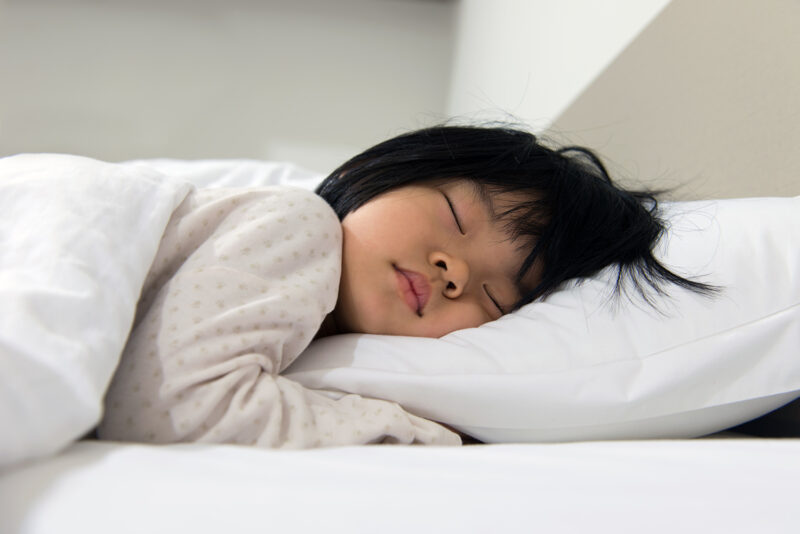
For most children, learning to sleep in their own bed is a skill that can be taught.
It’s normal for young children to wake up 4 to 6 times during the night. But if they often want to crawl into bed with you, chances are no one is getting a good night’s sleep.
For most kids, learning to sleep independently in their own bed is a skill that can be taught. Kacey Greening, Akron Children’s pediatric psychologist and behavioral sleep medicine specialist, answers your sleep-related questions.
Q: Is there generally an age when kids will start to want to sleep in their parent’s bed?
A: Kids of all ages can develop an interest in sleeping in their parent’s bed, typically due to factors such as illness and anxiety/fears.
Q: Is it ever OK for my child to sleep with me, such as if there’s a scary thunderstorm or they’re sick?
A: It’s natural to want to comfort your kids when they’re sick or scared. It’s important to understand that when kids sleep in their parent’s bed, it can disrupt their sleep patterns and confuse their expectations.
An alternative is to check on them and assist them in their own bed to prevent them from forming a sleep association with your bed. If you do let them sleep in your bed while sick, they may have some difficulty transitioning back to their own bed. But keeping the expectation consistent that they need to sleep in their own bed should help them adjust.
Q: Why is it important for my child – and for me – to sleep in our own beds?
A: Kids and parents tend to get better quality sleep when they sleep in their own beds. By having kids sleep in their own beds, it also prevents sleep onset associations from forming. This is when a child needs parental presence to fall asleep every night.
Q: What do you recommend in terms of a bedtime routine?
A: A visual bedtime routine is helpful for kids. It serves as a cue to help them transition to bedtime. Some helpful steps to consider including are:
- Taking medication
- Brushing teeth
- Using the bathroom
- Putting on pajamas
- Removing technology/screens
- Engaging in a soothing and relaxing activity, such as a reading a story or listening to a bedtime story from sleep-friendly apps and podcasts (e.g., Moshi Twilight, Sleepiest, Tales from the Lilypad, Honeybee Kids). There are also kid-friendly meditations and guided imagery activities to promote relaxation (e.g., Good Night World, Sleepy Mind).
Q: Is it OK to proactively put a nightlight in a toddler’s room – or is it best to wait to see if darkness/fear becomes an issue?
A: We tend to sleep best in the dark. Unless there’s a need for a nightlight, it’s OK to go without it. If a nightlight is needed, place it low to the ground and keep it dim.
Q: What do you think about a noise machine?
A: White noise machines can provide a steady, non-stimulating sound that helps the brain tune out other environmental sounds or changes. They can be a helpful tool in promoting healthy sleep.
Q: What do you recommend for positive reinforcement or rewards for kids learning to sleep in their own beds?
A: When providing positive reinforcement, consider offering items that your child will be interested in and motivated for. Not all rewards have to cost money. Quality time, praising/complimenting, free events, going to the park or having a friend over can be very motivating for kids.
You can also create a simple behavior chart and a rewards jar where you can offer a set number of stars/tokens to go in the jar when small goals are met to be used toward a larger reward. When setting goals, make them simple and achievable and offer the reward/reinforcement as soon as possible.
If your child continues to have trouble sleeping independently, talk to their pediatrician. If needed, the provider can refer your child to Akron Children’s Sleep Medicine.