Weighted blankets aren’t good for all kids. Consider their development and medical conditions first.
Weighted blankets and stuffed animals have become popular items. You might be wondering if you can safely use them with your kids. Dr. Jennifer Manning, neonatologist at Akron Children’s, explains what parents should know about weighted blankets and stuffed animals for kids.
‘They can be a complementary treatment’
“Weighed blankets have received a lot of hype. They are advertised to make you feel better and sleep better,” Dr. Manning explained. “They are not a new concept. From a medical standpoint, they can be used as a complementary treatment to help medical conditions like anxiety, autism and insomnia.
“The theory behind weighted blankets is that they use deep pressure stimulation to potentially improve your mood, reduce stress and help you sleep better at night. The deep pressure stimulation is thought to increase production of serotonin, a mood elevator; reduce nighttime levels of cortisol; and increase melatonin, which helps you sleep.”
The stress and uncertainty of the last few years have made the idea of weighted items more appealing to parents, said Dr. Manning.
“I think people are looking for something to help them relax and improve their sleep as well as the sleep of their children,” she shared.
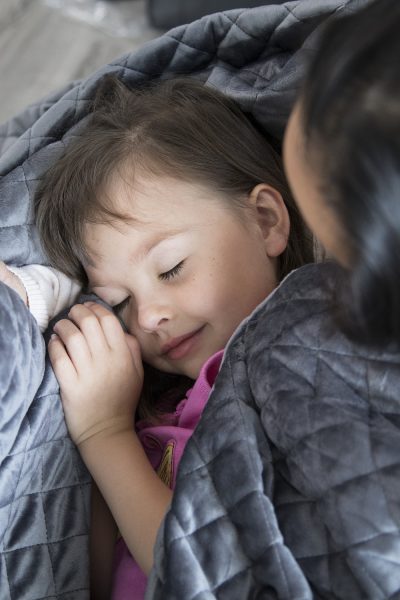
Kids with conditions including autism spectrum disorder, anxiety, ADHD and depression may benefit from using weighted items.
Consider each child’s development and medical status
Despite their wide appeal, Dr. Manning says all kids shouldn’t use weighted blankets and stuffed animals. First, consider each child’s medical status and development.
Dr. Manning stresses the importance of reading the manufacturers’ recommendations. You shouldn’t use a weighted blanket or item if your child:
- Is an infant or toddler younger than 4 years old.
- Has sleep apnea or other breathing issues.
- Has circulation problems, diabetes or a developmental delay.
Also, you should never:
- Cover a child’s face with the weighted item.
- Wrap the item tightly around a child.
- Use the item with someone who is too small or physically unable to remove the weighted item independently.
Kids who could benefit from weighted blankets
Dr. Manning notes that children with autism spectrum disorder, sensory processing disorders, anxiety, ADHD, depression and post-traumatic stress disorder may benefit best from the appropriate use of weighted items.
If you’re unsure if a weighted blanket or stuffed animal is right for your child, ask their pediatrician first. If your child doesn’t have a primary care provider, choose one of ours!