Celebrating 20 years of pediatric hospital medicine
Marketing and Communications Staff Writer
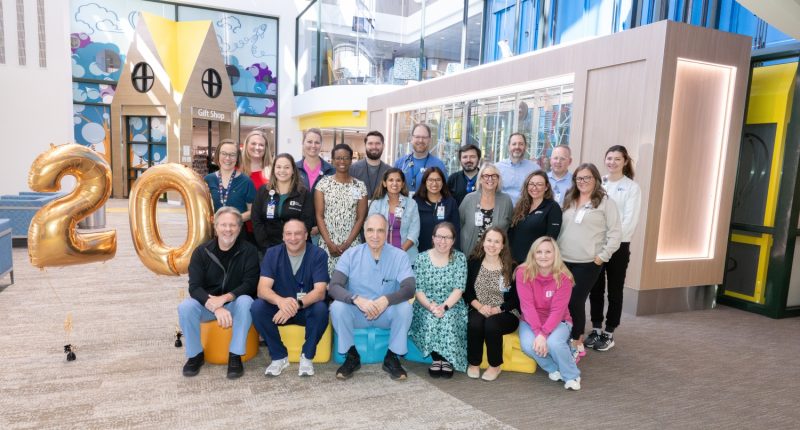
In 2005, 3 doctors joined Akron Children’s to start a pediatric hospital medicine (PHM) program to care for patients during their hospital stays. Today, the program has blossomed to more than 60 hospitalists at the Akron and Boardman campuses.
As the PHM program marks its 20th anniversary, founding doctors James Nard, Eugene Mowad and Douglas Moses reflected on the department’s early days, accomplishments and lessons learned.
The beginning
In 2004, an Akron Children’s recruiter approached Dr. James Nard about starting a PHM program. Dr. Nard accepted the invitation with an agreement that other members of his team – Drs. Moses and Mowad – would join him.
“We were presented with an opportunity to build a program that would care for many children at a large hospital,” said Dr. Moses. “We molded it into what we felt was best for the hospital and for the thousands of kids who would benefit from such a service.”
Pediatric hospitalists actively manage acute illnesses, coordinate care across specialties and ensure a patient’s smooth transitions from hospital to home. “The biggest challenge was people did not know what to do with us at first,” said Dr. Nard. “They viewed us as general community pediatricians, and that wasn’t our skill set.”
Another early challenge was 24-hour coverage with such a small team. “Caring for the patients while covering admissions and calls, especially in the very busy times, could be taxing, “said Dr. Moses. “We did all of that, plus educating the residents and students, while meeting with community physicians so they knew what our program was about.”
Dr. James Nard, Dr. Eugene Mowad and Dr. Douglas Moses
Growth
As the field of hospital medicine has matured, so has the Akron Children’s PHM program. One critical addition was the gradual development of a deep sedation service, which helps children undergo procedures that might otherwise be painful, anxiety-inducing, or require them to remain completely still. “It’s far and away the biggest hospitalist-run deep sedation program in the nation, serving about 2,500 patients each year,” Dr. Nard said.
According to Dr. Mowad, clinical expertise and forward-thinking leadership led to this initiative’s success. “People here had a vision and skill set for deep sedation, and hospital administration saw the value in it,” he said.
Dr. Moses emphasized that the deep sedation service has become a transformative force in PHM. “The impact of the sedation service cannot be understated,” he said. “Sedation allows many children to have very important studies and procedures by reducing anxiety and discomfort, ultimately improving the quality of care they receive.”
After starting with daytime in-person coverage and after-hours calls, the team took steps to add staff and provide 24-hour hospital coverage. “It makes sense from safety, quality and even business perspectives,” Dr. Nard said. “If you came into the hospital with your child at 2 a.m., why should that be different than 9 a.m.? It should not be different.”
As health care and medical technology change, hospitalists treat more complicated patients with long-term needs. “We previously cared for a lot of shorter hospital admissions,” Dr. Moses said. “For many patients now, there is a lot of coordination of care among hospitalists, specialists and support services to address all the complex needs.”
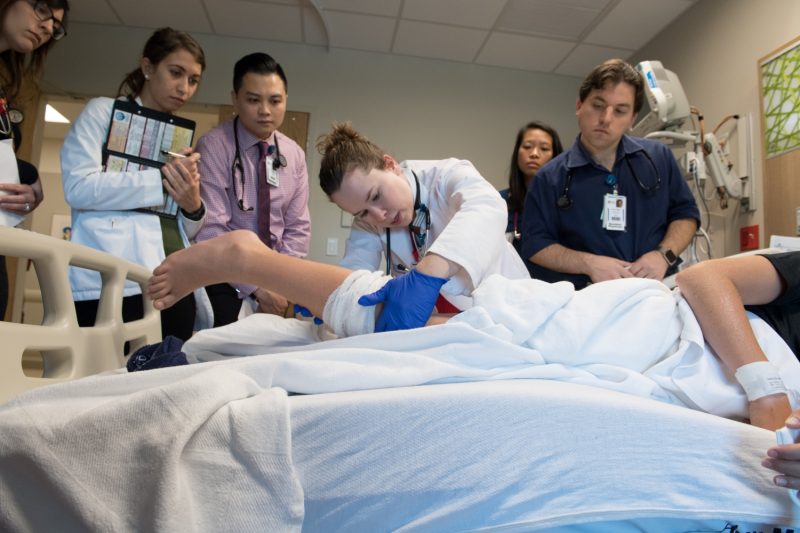
Education has been a central component of the program since the beginning
The importance of education
The PHM team has embraced growth and innovation through strategic training initiatives. “We’ve had a fellowship training program for about the last 10 years,” said Dr. Nard. “We have two fellows, so that is a big accomplishment, and have added dedicated nurse practitioners to the team.”
From his experiences as a residency program director, a director for medical education and now a vice dean at a medical school, Dr. Mowad has special appreciation for the value of learning and professional development. “Education has been my thing all along,” he said. “The fact that they’ve chosen to establish a fellowship shows the hospital’s commitment to the field for medical education.”
Reflections
After 20 years of experience in pediatric hospital medicine, the doctors have unique perspective to share with the next generation of pediatricians.
“There are times when it is going to be work, and there are times when it is going to be life. It is not 50/50,” said Dr. Nard. “Try to leave work behind at the end of the day because you are never here alone. There are many other people here to take care of patients.”
According to Dr. Mowad, teamwork is essential. “In a hospital setting, you’ve got to be part of the team,” he said. “We have a few cases each year where we put our heads together to break open a case. That is the type of thing that keep you going on a bad day.”
Dr. Moses offered a heartfelt reminder of the true purpose behind the profession. “Medicine has a lot of pressures attached to it – meetings, paperwork, phone calls and more,” he said. “But the real reason we are here is to care for sick children.”
Inside Children’s is an online community that provides inspirational patient and staff stories as well as information about health and parenting, hospital news, fundraising events and more.