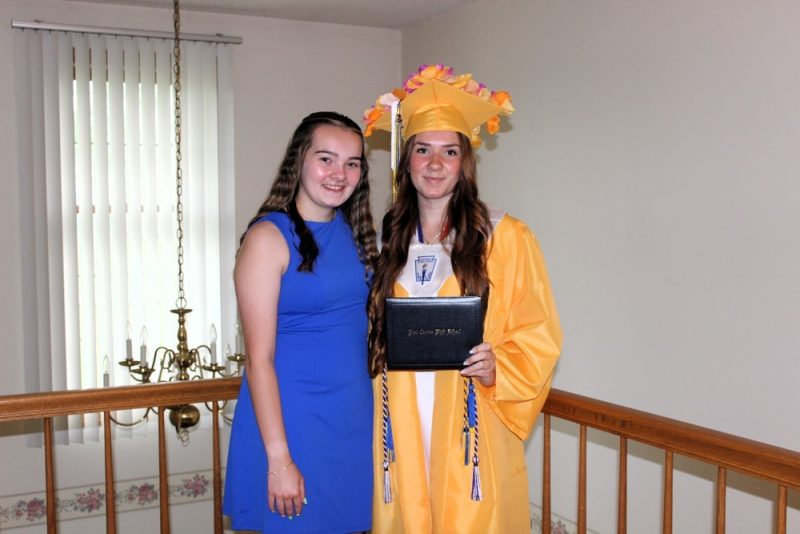
Sisters Sarah (right) and Mickenzie (left) Helms
For sisters Sarah and Mickenzie Helms, scoliosis has been part of life since childhood. Both were diagnosed at a young age, spent years trying different treatments and eventually found themselves under the care of the same Akron Children’s orthopedic surgeon.
But while their diagnoses were similar, their paths to surgery were quite different.
Sarah, 18, underwent spinal fusion surgery to correct her scoliosis after years of pain and growing concerns about her appearance. Her older sister, Mickenzie, 20, needed surgery to repair a painful stress fracture in her lower back.
Both surgeries were performed by Akron Children’s orthopedic surgeon Dr. Lorena Floccari. In an unusual twist, the sisters recovered at home together during their winter breaks from school.
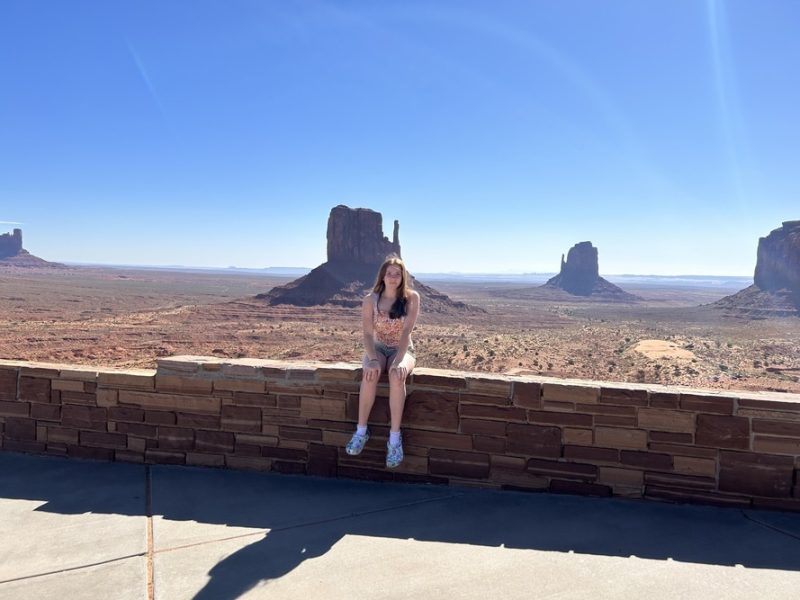
Sarah was very conscious of how she looked prior to having surgery to fix her spinal curve.
Sarah’s story: Growing up with scoliosis
Sarah was accustomed to an active childhood.
“I was a very healthy and active child,” she said. “I grew up on a farm where we raised pigs.”
Around age 11, Sarah began experiencing back pain, even while walking. A visit to a chiropractor led to her scoliosis diagnosis.
Her first specialist recommended surgery, but Sarah and her parents wanted to explore other options. She tried physical therapy, including Schroth therapy and bracing.
Her curve initially stabilized but eventually began progressing again.
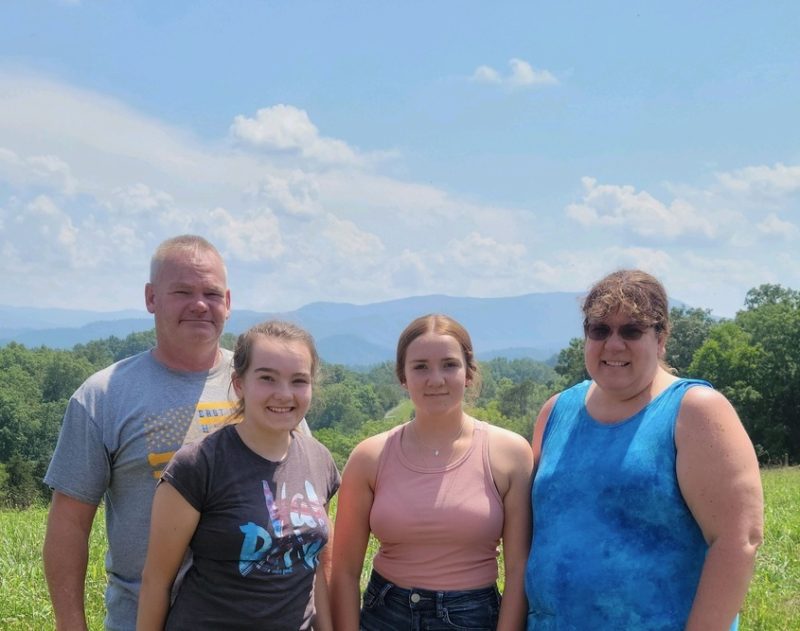
Sarah (second from right), pictured with her sister and parents
When scoliosis affects more than your back
As Sarah got older, the physical changes became increasingly difficult, particularly during her teenage years.
“I was having a lot of body image issues related to my scoliosis,” she said. “My right side stuck out, and I was very conscious of it.”
By her senior year at East Canton High School, Sarah was ready to consider surgery. She had been a patient of Dr. Floccari since 2022.
“I wanted to be able to wear tank tops and tube tops without looking crooked,” she said. “My top half went right, and my bottom half went left.
“Although I had pain, I think the way I perceived how I looked was a more motivating factor in deciding to have spinal fusion surgery,” she added.
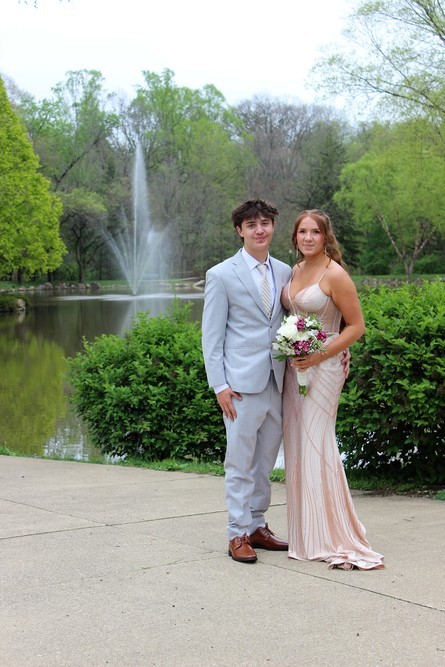
Sarah had spinal fusion surgery in November 2025.
Sarah and her family scheduled surgery for November 2025, allowing her to finish volleyball season before the procedure.
“Sarah had an S-shaped scoliosis curve in both her upper and lower back. Before surgery, we carefully discussed whether to correct both curves or focus only on the larger upper curve,” said Dr. Floccari. “After reviewing the options, Sarah felt strongly that preserving flexibility was most important to her, so we decided to treat only the upper curve.”
Dr. Floccari worked with an engineer to design custom rods to match Sarah’s anatomy and restore her alignment.
“During surgery, we performed a T3-T12 spinal fusion using low-dose 3D navigation to place each screw with precision, and then we used the custom rods to restore her alignment,” said Dr. Floccari.
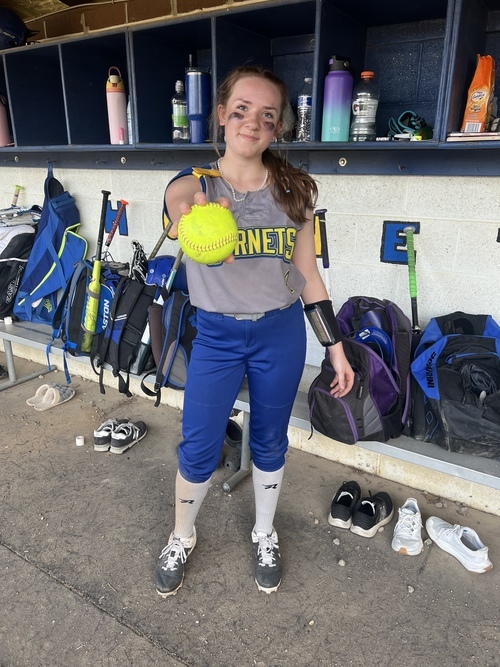
Sarah is now a freshman at The University of Akron pursuing nursing.
A new chapter without back pain
Today, Sarah has regained much of her flexibility, including the ability to touch her toes. Bending backward and twisting remain more challenging, and she still has some numbness as she heals. But she’s happy with the trade-off.
“I was very pleased with the correction we achieved,” said Dr. Floccari. “In fact, the biggest challenge has been convincing her to slow down a little during recovery! It has been wonderful to see her return to the activities that she loves.”
After graduating from high school in May, Sarah began studying nursing at The University of Akron. She hopes to apply for Akron Children’s ASCEND program in the coming years.
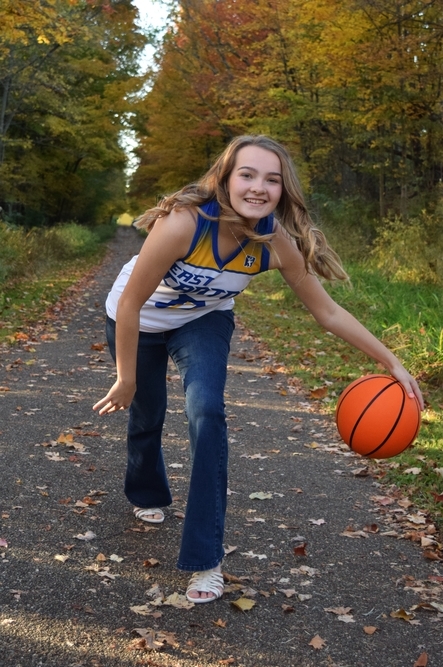
Mickenzie was diagnosed with scoliosis at 9 years old.
Mickenzie’s story: Staying active with scoliosis
Like her younger sister, Mickenzie was diagnosed with scoliosis as a child. Doctors discovered her spinal curvature when she was 9 years old.
“When I was first diagnosed, my scoliosis was mild and they just monitored it,” she said. “I was encouraged to play sports because it helps with flexibility and mobility of the spine.”
Mickenzie, an avid basketball player since third grade, welcomed that advice. Over the years, she tried several treatments to manage her scoliosis and discomfort.
“Through the years I have done bracing, PT, cupping and dry needling,” she said.
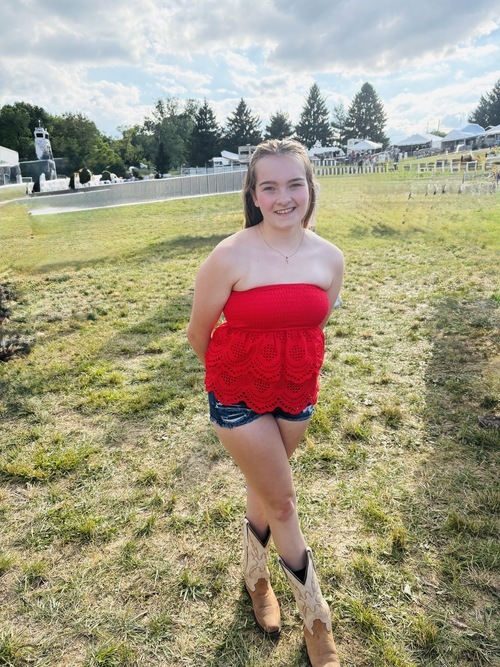
Mickenzie began experiencing worsening back pain, which turned out to be a stress fracture in her back.
When back pain becomes more than scoliosis
When Mickenzie began experiencing worsening back pain, her providers suspected a fracture, but imaging didn’t reveal one at first.
As the pain became increasingly difficult to manage, repeat imaging showed a stress fracture in her lower spine (also referred to as L5 spondylolysis). On top of that, her scoliosis curve had increased from 23 to 43 degrees.
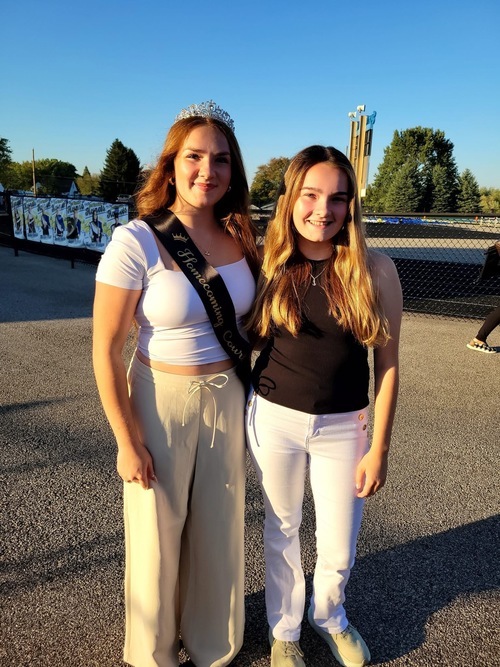
Mickenzie and Sarah had back surgery within one month of each other during late 2025.
Surgery offers a path forward
As a junior at Muskingum University studying early childhood education, Mickenzie needed a lasting solution. Working with children, including those with special needs, often requires her to bend, squat and get down on the floor.
“Mickenzie had a unique situation because she was dealing with both scoliosis and a stress fracture in her lower back,” said Dr. Floccari. “The key challenge was determining which condition was causing her pain.”
A diagnostic injection at the fracture completely relieved Mickenzie’s pain for several weeks, confirming the source of her discomfort.
She and Dr. Floccari decided on surgery during her December 2025 college break.
“I wanted to get it done because the fracture was getting worse, and my back was becoming more unstable,” Mickenzie said.
On Dec. 22, Dr. Floccari performed surgery to repair the fracture using screws to stabilize the affected area.
“She was an excellent candidate for a direct repair of the fracture, which aims to restore more normal anatomy and function,” said Dr. Floccari. “The procedure is minimally invasive and uses advanced 3D navigation to place one screw on each side of her spine to repair the fracture.”
After surgery, Mickenzie wore a back brace to protect the area while it healed.
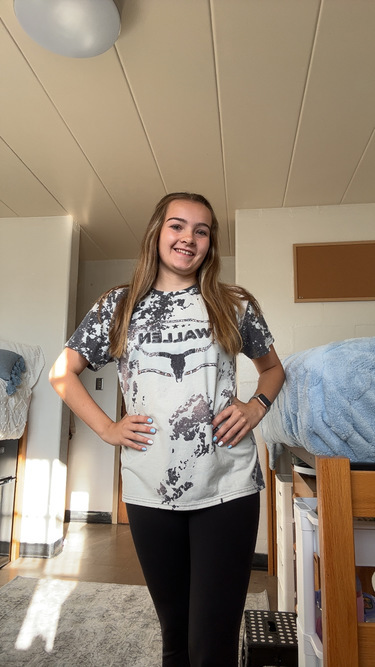
One of biggest wins from surgery is Mickenzie can now perform everyday activities pain-free.
Finding a new perspective
For Mickenzie, some of the biggest milestones have been everyday activities she can now enjoy without pain.
During the summer, she worked full-time and could participate more fully with the children in her care.
“I was able to get on the trampoline with the kids and jump around,” she said.
She also developed a new appreciation for exercise and movement.
“Going through this has made me look at life in a different way,” she said. “Before surgery I wasn’t able to do yoga, and now it’s one of my favorite things.”

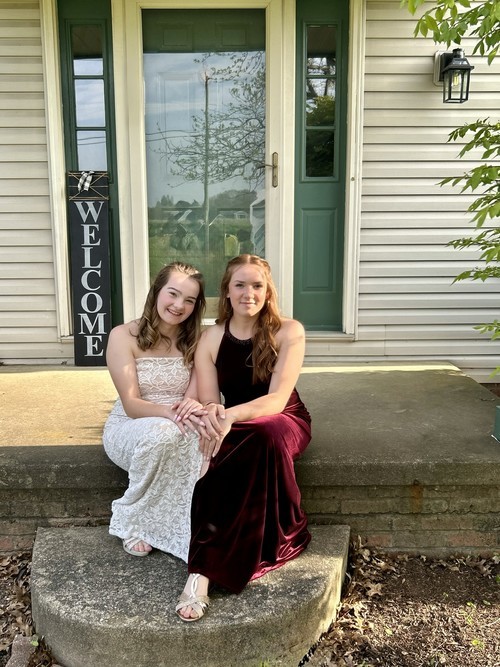
Dr. Floccari says both sisters have been amazing patients, and it’s been a privilege to be part of their care. “They’re incredible young women with bright futures ahead of them.”
She’s also returned to weight training. Basketball, however, is one activity she hasn’t resumed. She’s still hesitant about the possibility of getting hurt.
“People are always coming at you, and you can get hit from behind,” she said. “I’m worried about getting hurt.”
Instead, she’s considering coaching, inspired by her former high school basketball coach, who was also an Akron Children’s patient.
“She has a really good perspective and encourages me to enjoy the moment and focus on the things I am still capable of doing,” said Mickenzie.
Mickenzie knows her scoliosis continues to progress and that another surgery may be in her future. For now, she’s grateful to move without the pain that once limited her daily life.
“Both sisters have been amazing patients, and it’s been a privilege to be part of their care,” said Dr. Floccari. “They’re incredible young women with bright futures ahead of them.”
Learn more about orthopedic surgery at Akron Children’s.