Walking to school in the dark? Here’s how to stay safe
Brenna Bacci, Digital Content Specialist
Pedestrian safety is even more important as the days get darker.
When daylight saving time ends and clocks “fall back,” many children who walk to school may be traveling in lower-light conditions or the dark. Heather Trnka, injury prevention manager in Akron Children’s External Affairs department, offers tips to ensure your child is safe as we transition into the darker months.
Make sure your child is seen
Dress in brightly colored outer layers whenever possible. Avoid what is called “urban camouflage,” like blacks and greys.
You can add reflective stickers, patches or flashing lights to coats, backpacks and shoes.
Consider using a flashlight during darker mornings.
Remind your child that even if they can see a vehicle, the driver may not see them.
Choose the safest route to walk to school
Review how your child walks to school, and select paths with the clearest sidewalks.
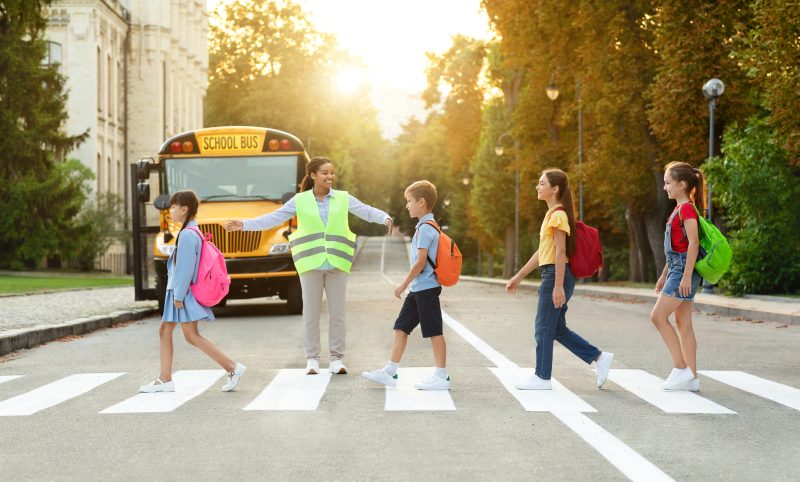
Only cross the street at marked crosswalks.
Whenever possible, cross where there are crossing guards.
Avoid shortcuts through parking lots or areas with limited visibility. Drivers aren’t expecting children to be walking in these locations.
Cross safely
Teach your child to stop at the curb and look left, right, then left again.
Make eye contact with drivers before crossing. This ensures drivers see pedestrians and bikers.
Cross only at crosswalks and intersections, never cross mid-block or between cars.
Especially for middle school and high school walkers, put phones and other distractions away while walking.
Whenever possible, have your child walk with a trusted adult or a group of friends to school.
Walk together
Children cannot judge how fast a vehicle is going or if it is safe for them to cross until they are 10 to 11 years old. Until this time, they should not be permitted to travel independently where there is not a safe place to cross the road.
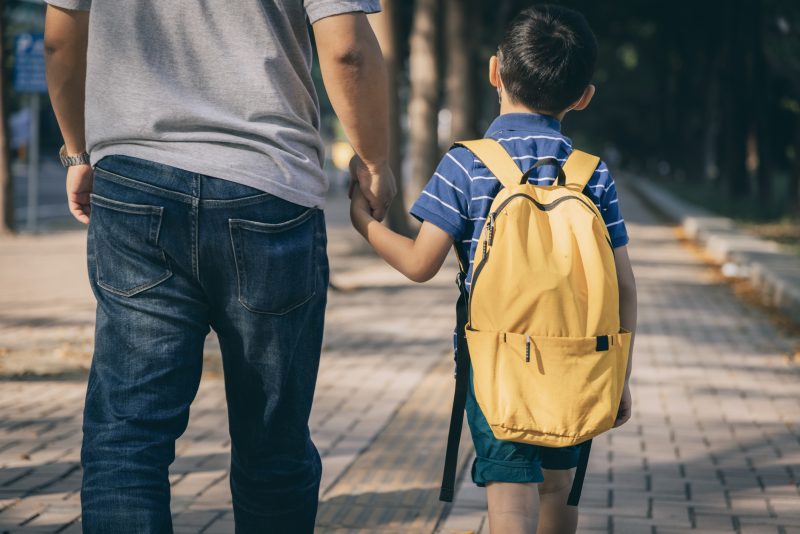
Younger students should also walk with a parent, older sibling or trusted adult. If that isn’t possible, encourage your child to walk with friends as a group.
Remind your teen drivers, too
Teach your new driver to expect different traffic after daylight saving time. That can include tired drivers adjusting to the time change.
Remember to stay alert. Drowsy driving can be just as dangerous as impaired driving.
Drivers need to slow down in school zones and watch for pedestrians, especially at dawn and dusk.
Account for the weather
Autumn and the time change can bring fog, rain and snow, which can reduce visibility on the road.
Remind new drivers that wet leaves can be similar to driving on ice. Increased stopping distance is needed.
Have your child wear the appropriate outerwear that does not obstruct their vision.
The bottom line
When walking on the sidewalk, be bright and visible! While on the road, new drivers and even experienced drivers should remember to be alert. When the time first “falls back,” drivers should take extra time to look for pedestrians during school zone hours.
Learn more about keeping your child safe through the Safe Kids coalition.
Inside Children’s is an online community that provides inspirational patient and staff stories as well as information about health and parenting, hospital news, fundraising events and more.