Home > Inside Blog > Provider News > Nurse practitioner shares precepting philosophy and approach to compassionate pediatric care
Nurse practitioner shares precepting philosophy and approach to compassionate pediatric care
Kathy Johnson - Senior Corporate Communications Specialist
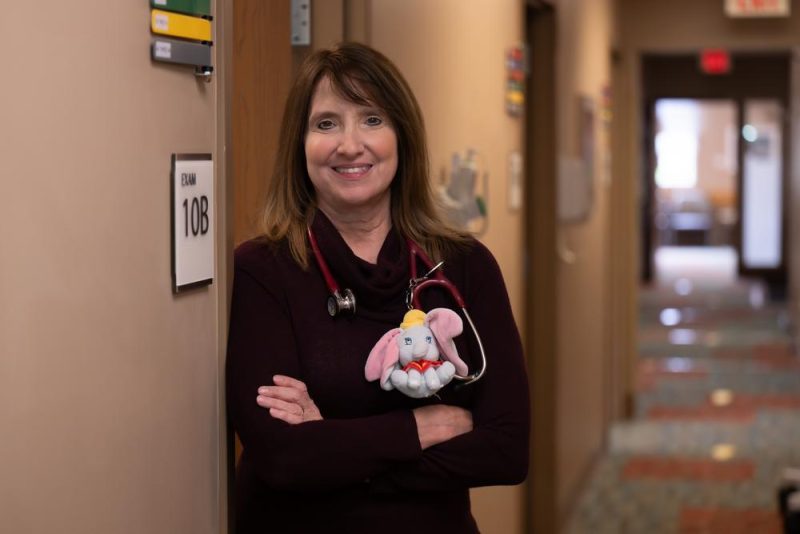
Joan Paskert
For Akron Children’s Pediatrics Nurse Practitioner Joan Paskert precepting is about more than supervising students in a clinical environment. It’s also about guiding them through one of the most important transitions of their careers.
“Being a preceptor means bridging the gap between what a student has learned in the classroom and what they need to succeed in a clinical setting,” Joan said.
Adapting teaching to modern medicine
When Joan first began precepting, much of the focus was on foundational clinical skills and paper charting. Today, her teaching reflects the realities of modern medicine.
“My teaching now includes how to effectively use tools like smart sets, smart phrases and even AI to improve efficiency and accuracy in patient care,” she explained.
Still, technology has never replaced the human side of care in her approach.
“I see my role as not only teaching clinical skills, but also helping students build confidence,” she added.
That emphasis on confidence remains a constant theme in Joan’s precepting philosophy. She makes it clear to students that growth takes time.
“I focus on reinforcing each student’s strengths and reminding them of the progress they’re making,” she said. “Confidence and competence come with time and experience.”
Building confidence in future providers
Ask Joan why she continues to precept, and she’ll point to the moments that linger long after a rotation ends. One such moment came when a student shared their career aspirations.
“I once had a student tell me they aspired to become a nurse practitioner like me,” Joan recalled. “They shared that they admired the rapport I built with families and how I incorporated teaching into every visit.”
That conversation continues to resonate with her. “It reminded me that precepting goes beyond clinical skills – it’s also about modeling compassion, communication and lifelong learning,” she said.
Moments that reinforce the impact of teaching
Students have recognized Joan for excellence in precepting, and she believes that recognition stems from her individualized approach. “When I begin working with a new student, I make it a priority to understand how they learn best,” she said. “A one-size-fits-all approach doesn’t work, so I tailor my teaching to each individual – taking into account their prior knowledge and experience.”
Creating a supportive learning environment is central to her success. “I emphasize that there are no ‘stupid’ questions,” Joan said. “I also provide feedback, highlighting both strengths and areas for growth, so students feel supported and know exactly how to improve.”
That supportive approach is something her students notice right away.
“One habit of Joan’s that I’ve incorporated into my own practice is making each patient feel like they’re the only one you’re seeing that day,” said Alexandra Bryan, nurse practitioner in urgent care and one of Joan’s former students. “Whether that’s talking about their hobbies, noticing a character on their shirt or remembering something from a previous visit, Joan makes every patient feel seen – even when she’s caring for 20 or more in a day.”
Balancing patient care and teaching responsibilities
Balancing precepting with a full patient load can be challenging, particularly on busy days. Joan has developed practical strategies to make teaching seamless rather than burdensome. “On particularly busy or challenging days, I try to be intentional about balancing both responsibilities,” she said. “I’ll often have a student take the lead on 2 or 3 patients from start to finish – working through the history, exam and plan.”
The approach benefits everyone involved. “This allows them to gain meaningful, hands-on experience while also helping me stay on track with patient flow,” she said. “I find this approach keeps the day manageable while still providing a valuable learning opportunity.”
Learning goes both ways
Joan’s path to nursing began with 2 passions: people and education. “From a young age, I’ve always enjoyed connecting with people and working with children,” she said. “When I learned about pediatric nurse practitioners, I realized it was the perfect blend of my passions.”
Now, years into her career, Joan continues to learn from those she teaches.
“My students often ask thoughtful ‘why’ questions that push me to stay curious and continually revisit the latest evidence,” she said. “This not only strengthens my own clinical knowledge but also helps me grow as an educator.”
Her own teaching style is inspired by one of her high school teachers. “He always took the time to recognize my strengths before offering constructive feedback. Most importantly, he helped me learn how to learn,” Joan said.
A lasting lesson in teamwork and growth
And Joan has done the same for Alexandra, and many like her.
“Joan taught me that even if you don’t know the answer, you need to know how to find it,” she said. “There were a few times where she would ask other providers in the office their opinions on a patient and other times providers would come to her for her opinion. Health care is a team sport; we all need to work together.”
About Kathy Johnson - Senior Corporate Communications Specialist
Kathy Johnson is a northeast Ohio-based freelance writer, editor and public relations consultant with over 25 years of experience in the healthcare industry. She writes extensively for blogs, websites, newsletters and magazines. Since 1999, she has been the principal at New View Communications serving a variety of hospitals and healthcare-related clients.
Inside Children’s
Inside Children’s is an online community that provides inspirational patient and staff stories as well as information about health and parenting, hospital news, fundraising events and more.