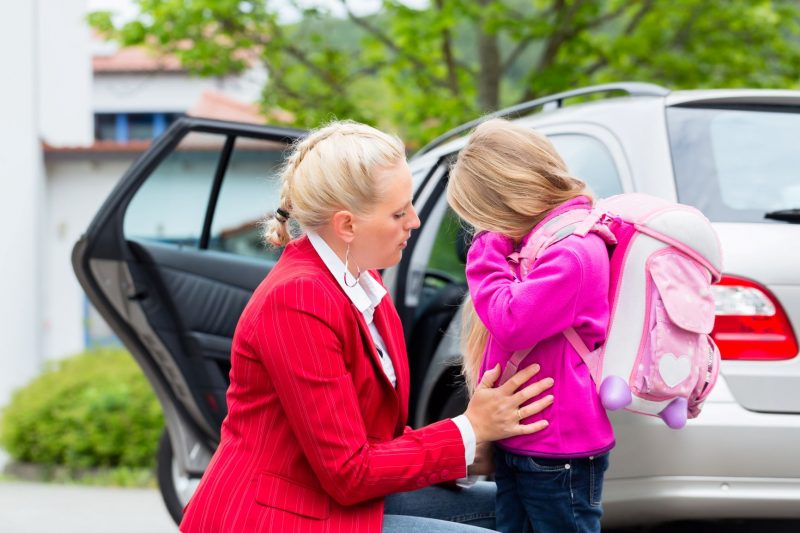
If your child has school-related anxiety, simple breathing exercises can help them relax.
Back-to-school time can be fun and exciting for some kids, but it may cause anxiety for others. Young children may worry about being away from their parents, while older kids may be anxious about navigating middle school or high school.
“It’s important for parents to know that most children who have school anxiety actually like school,” said Dr. Laura Markley, child and adolescent psychiatrist with Akron Children’s Behavioral Health and medical director of Addiction Services. “The fearsome part for many children is being away from their parents or home, not the experience of being at school.”
Dr. Markley offers tips on helping your anxious child successfully transition from summer fun to the classroom.
Develop a routine and stick to it.
Routines are comforting. They help children know what to expect daily and reduce stress. Start the bed routine now, and do not wait for school to start.
“Have a bedtime routine centered around relaxation – such as warm shower or bath, picking out their clothes for the next day or reading a story,” Dr. Markley suggested. “Do not allow electronics in the bedroom. They disrupt sleep and keep children awake – and sleep deprivation can significantly worsen anxiety.”
Normalize anxiety.
Let your child know it’s OK to be nervous, and you will do your best to help them through it. But going to school is very important and not something they can avoid.
Familiarize your child with the school environment.
If you can, go to the school to see the child’s classroom and meet the teacher prior to the start of the year.
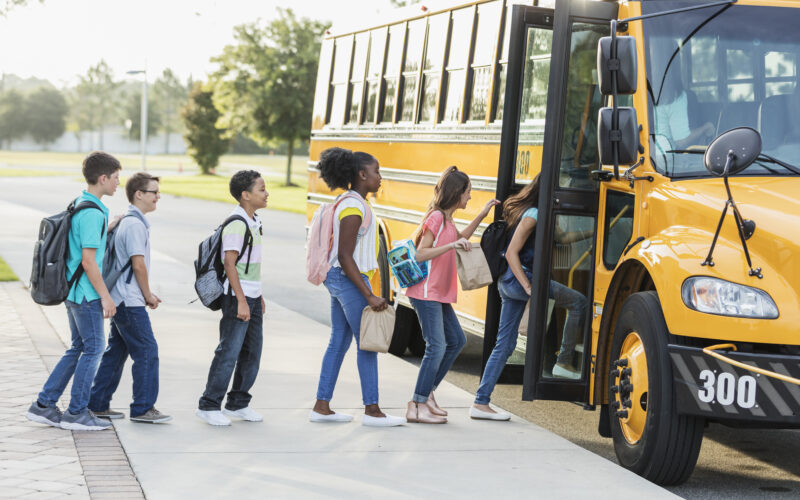
Help your child learn how to make friends on the bus, at lunch and recess.
Promote peer support.
Carpooling with neighbors or getting to know the kids on the bus will help your child feel like they are not going to school alone. Encourage them to participate in school activities, and suggest how they can make new friends at recess.
Discuss scenarios to help your child feel prepared.
Explain what they should do if they forget their lunch or lunch money. Teach them to talk to a teacher or a guidance counselor if teasing becomes bullying – and empower them to tell an adult if they see another student getting bullied.
Praise your child when they come home, and ask about their day.
Show individual attention to each of your kids. Show an interest in what they worked on at school. Positive attention is a huge motivator!
Teach your child relaxation techniques.
An easy one for children is to blow air out of their mouth, as if blowing bubbles, for 3-5 seconds and to repeat the word “calm” in their mind.

Kids aren’t “faking it” when their anxiety causes physical symptoms like an upset stomach.
Physical symptoms from anxiety can be real
Anxiety in elementary-aged children commonly presents as physical symptoms – upset stomach, headache and sometimes even nausea, vomiting or diarrhea.
“It is important to understand that they are not ‘faking’ these symptoms, even though the symptoms will often go away shortly after being told they can remain home, on weekends or days off school,” Dr. Markley offered. “With any age child, the anxiety can present with undesired behaviors, including significant tantrums.”
Anxiety disorders are the most common mental health concerns affecting youth. Dr. Markley said when the issues begin to interfere with their functioning, it is time to consult your child’s pediatrician. Do not wait until your child has missed several days of school.
“With anxiety, the faster you intervene, the better,” she shared. “Your child’s pediatrician can help assess the situation and recommend therapy to help your child cope with their feelings.”
In addition to our network of primary care providers, Akron Children’s also offers School Health Services at more than 40 school districts. Our care teams are dedicated to helping your child stay healthy and ready to learn.