Home > Inside Blog > Hospital Updates > Akron Children’s ‘Goes Orange,’ inviting community to talk about pediatric firearm injuries and how to prevent them
Akron Children’s ‘Goes Orange,’ inviting community to talk about pediatric firearm injuries and how to prevent them
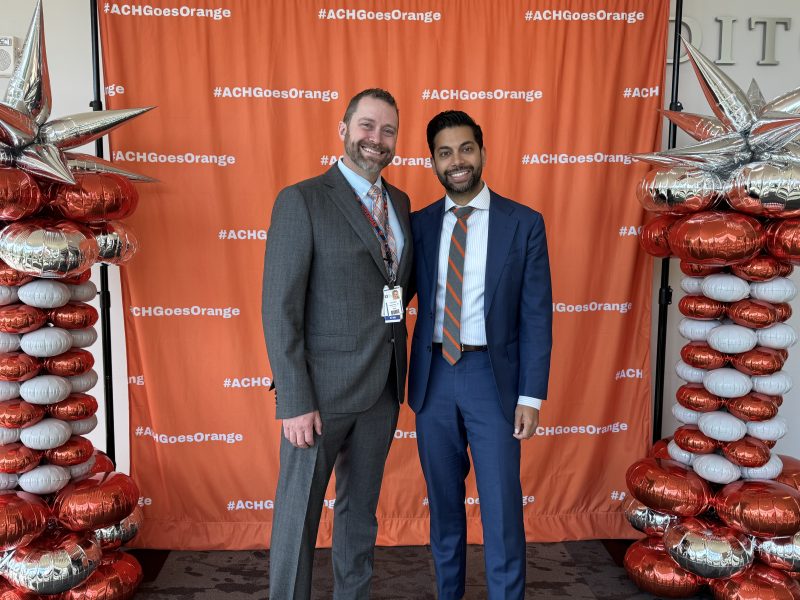
Dr. Nahan Heinzerling (left) introduced Dr. Chethan Sathya, a trauma surgeon and leading researcher of pediatric firearm injuries.
Firearms are the leading cause of death for children and teens in the United States.
That sentence was the driving force behind a full-day conference Akron Children’s held on May 29 entitled, “Akron Children’s Goes Orange: Strategies to Address Pediatric Firearm Injuries and Their Prevention.”
The Akron Children’s surgery and trauma teams led the effort. They serve on the front lines, caring for children who come to the hospital much too frequently with gunshot wounds. The audience included pediatricians, social workers, pediatric behavioral health providers, teachers and school counselors.
In previous years, to mark Gun Violence Awareness Month, the team donned orange shirts. Orange, the designated awareness hue, is the color worn by hunters to protect themselves.
“Awareness is the first step, but we have to be able to talk about it,” said Dr. Tsulee Chen, chair of the Department of Surgery at Akron Children’s. “We have to be able to do something about it. We have to be able to show the community we care.”
Dr. Nathan Heinzerling, Akron Children’s trauma medical director, said the conference would address all aspects of firearm injury, from root causes to safe storage strategies.
“Today is not a political debate,” said Dr. Heinzerling. “It’s about the current culture and the need to address gun violence to protect our community.”
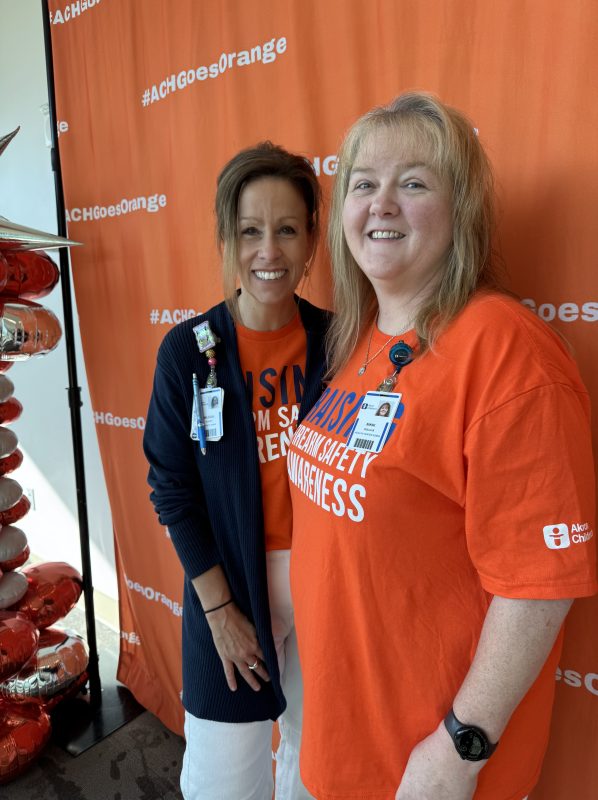
Felecia Turley and Nikki Doulilis helped plan the conference, which organizers hope to be an annual event.
Perspective from a trauma surgeon
Dr. Chethan Sathya kicked off the conference. He is a pediatric trauma surgeon at Northwell Cohen Children’s Hospital in New York and a National Institutes of Health (NIH)-funded firearm injury prevention researcher.
Dr. Sathya’s desire to get involved in advocacy in this area started early in his career. During the first week of his fellowship, he treated a 6-month-old baby with a bullet wound.
“Prior to this, I treated hundreds of adults with gunshot wounds,” he said. “But this was a baby sitting in the back of car in a car seat.”
Dr. Sathya said the biggest mistake we are making is lumping all firearm injuries and deaths together.
“Firearm suicide versus firearm homicide … versus accidental injuries versus public mass shooting. I would argue they are almost entirely different in their root causes,” Dr. Sathya said. “But every conversation I see happening on this topic buckets it all together.”
He believes this has led to “stigmatization, polarization and vilification of gun owners.”
“We have to start exploring the nuances of these risk factors if we’re going to tackle this,” he said.
A football coach committed to breaking down walls
Kemp Boyd, executive director of Love Akron, is a pastor and football coach at Garfield High School. He talked about the importance of mentoring young people, saying we fall into a pattern of reacting after tragedy rather than connecting with people who could be at risk.
He believes progress in reducing firearm injuries will come from having good, meaningful conversations with young people.
Kemp sets phone alerts to let him know it’s time to check in with his former players and other important people in his life. “It’s about presence before crisis,” he said.
Children’s hospitals are at the forefront
Matthew Cook, president of the Children’s Hospital Association (CHA), said children’s hospitals need to be involved in this issue because of its far-reaching impact.
“It’s not just the children who die,” he said. “It’s also the ones who survive and go through the trauma for the rest of their lives, the trauma their families go through and the trauma all of you go through whether you work in a hospital or at a school.”
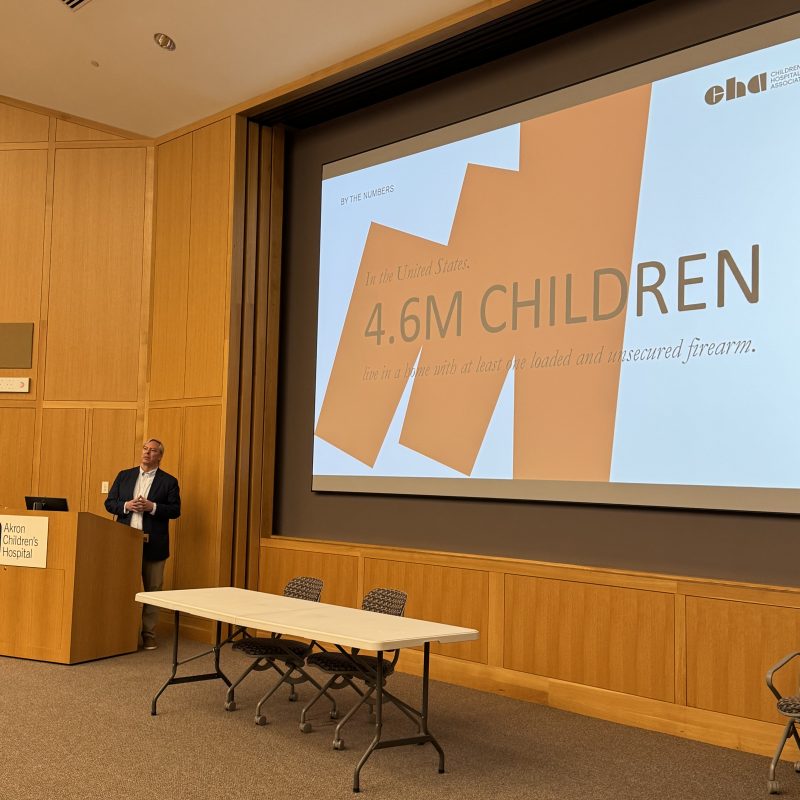
“This is not a Second Amendment issue,” Matthew said. “We have protection for gun ownership in this country. That’s not the issue. The issue is, when you have one, what happens with it? We have 4.6 million children who live in a home with at least one loaded, unsecured firearm.”
Matthew said some people question whether this is an issue the CHA should wade into. But, he says, children’s hospitals have always been out front on issues like car safety seats, safe storage of medications, and water safety for kids.
“Why is this any different?” he said.
Matthew Cook, CEO of the Children’s Hospital Association, notes that 4.6 million U.S. children live in homes where firearms are loaded and unsecured.
“We think it’s quintessential care to be talking about this issue,” she said. “Picture this moment. You’re tucking your child into bed at night, checking homework, packing lunches and locking your doors. You’re doing all the little things that parents and caregivers do to keep your kids safe. What most parents never imagine is one of the greatest dangers to the child could already be inside their home. It could be loaded, often unsecured, often discovered in just seconds by a curious child or a teenager who is struggling silently.”
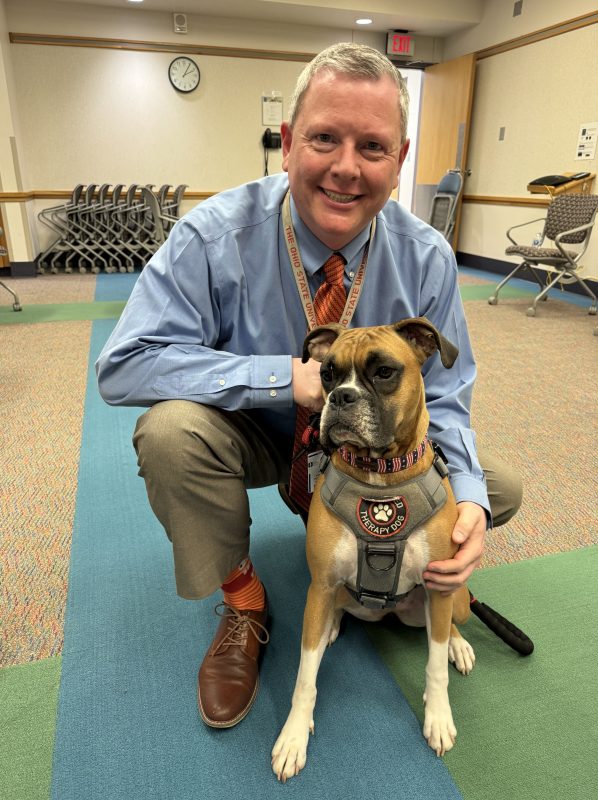
Dr. Geoffrey Putt, with therapy dog Scarlett, shows off his orange necktie and socks. He was a panelist at the conference, “Akron Children’s Goes Orange: Strategies to Address Pediatric Firearm Injuries and Their Prevention.”
Drs. Geoffrey Putt and Ayla Mapes, pediatric psychologists with Akron Children’s, joining Daniel Bennett, chief strategy officer with Ohio Suicide Prevention Foundation, on a panel discussion called “Hidden in Plain Sight: Recognizing Suicide Risk Before Crisis.”
Hali Baker, Akron Children’s nurse practitioner, and Lauri Natko, community relations officer with the Akron Police Department, discussing “Firearms Safety Screening and Community Outreach.”
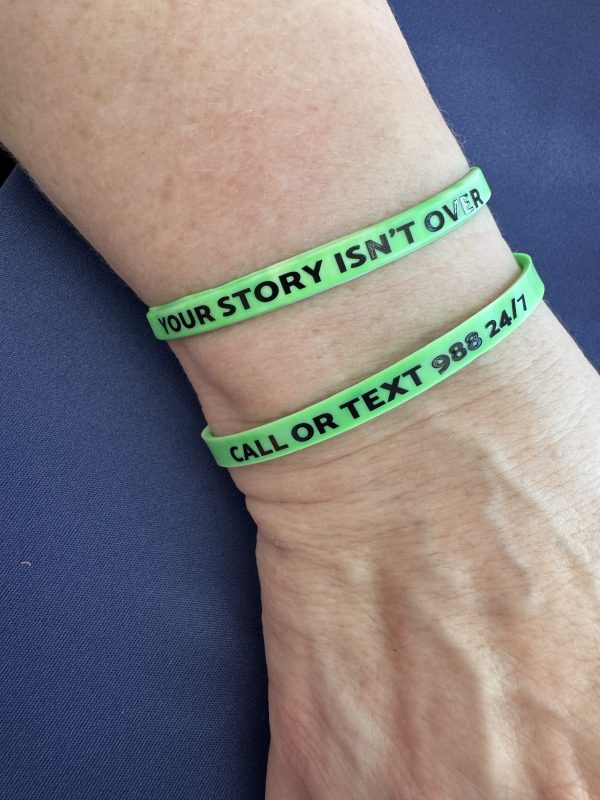
Conference giveaways included orange T-shirts and these suicide prevention wristbands.
Inside Children’s is an online community that provides inspirational patient and staff stories as well as information about health and parenting, hospital news, fundraising events and more.