Spotting preeclampsia symptoms early is key for a healthy pregnancy
Marketing and Communications Staff Writer
Pregnancy comes with a lot of changes — and a lot of doctor appointments. While it might feel like one more thing on your to-do list, prenatal checkups are important for the health of you and your baby.
At each check-up, your doctor assesses your health, how your baby is growing and can offer tips to ensure your pregnancy is as healthy as possible. But your doctor is also keeping an eye out for early signs of complications.
While most pregnancies go smoothly, some conditions like preeclampsia need quick attention.
“Preeclampsia is a serious condition that causes high blood pressure during pregnancy or soon after your baby is born,” says Prabhcharan Gill, MD, a maternal-fetal medicine specialist at Akron Children’s. “Left untreated, it can cause early birth or low birth weight for baby. For mom, it can lead to stroke or even organ damage.”
Preeclampsia in pregnancy can sound scary, but knowing the signs and having regular prenatal check-ups can help doctors catch it early so you can get the treatment you need. Here’s what you should know.
What is preeclampsia?
Preeclampsia is a serious pregnancy complication that causes continual high blood pressure in pregnancy or just after your baby is born. It also can lead to high levels of protein in your urine, which is a sign that your kidneys and other organs aren’t working normally.
Preeclampsia usually starts after 20 weeks of pregnancy, often in the third trimester, but can also happen after birth. If it isn’t found and treated early, it can be dangerous for you and your baby.
Preeclampsia can affect important organs like your kidneys, liver and brain. It can also affect the placenta, which gives the baby oxygen and nutrients. This can lead to problems such as early birth, developmental delays or even stillbirth.
In severe cases, preeclampsia can turn into eclampsia, a dangerous condition that causes seizures and needs emergency medical care.
Preeclampsia risk factors
You may be at a higher risk for preeclampsia if:
It’s your first pregnancy
You’re carrying twins
You had preeclampsia in a previous pregnancy or have a family history
You have a chronic condition, such as high blood pressure, kidney disease, diabetes or autoimmune diseases like lupus
You have obesity
You’re age 35 or older
Let your doctor know if you have preeclampsia risk factors. This will help your doctor take steps to help prevent problems and monitor your pregnancy more closely.
“The best prevention is the use of low-dose aspirin,” says Dr. Gill. “If you have preeclampsia risk factors, your doctor may recommend taking aspirin daily after 12 weeks of pregnancy.”
Preeclampsia symptoms
The telltale signs of preeclampsia are persistent high blood pressure and signs of organ damage, like protein in your urine.
Some women don’t notice any preeclampsia symptoms at first. But as it progresses, they may have:
A bad headache that doesn’t go away
Vision changes like blurred vision or seeing spots or flashing lights
Pain in the upper belly, especially on the right side
Trouble breathing or shortness of breath
Sudden swelling of the face, hands or feet
Sudden weight gain
Nausea or vomiting
Dizziness or feeling very unwell
These symptoms can be signs of severe preeclampsia or eclampsia (seizures) and are emergencies.
“Some of these preeclampsia symptoms are common in pregnancy, so listen to your body and watch for worsening symptoms,” says Dr. Gill. “Tell your doctor if you feel like something’s not right or if symptoms are severe, head to the nearest Emergency Room.”
Preeclampsia treatment
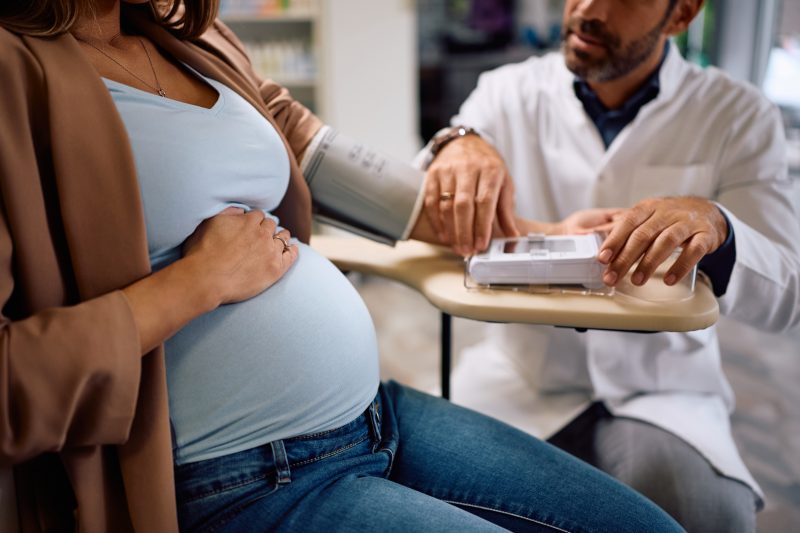
Regular prenatal care can help your doctor catch the early signs of preeclampsia. At each visit, your blood pressure will be checked and your urine may be tested for protein.
Your doctor also may order blood tests to see if your kidneys, liver and platelets are working as they should. And in some cases, you could have an ultrasound and fetal heart test to check on the health of your baby.
“If your doctor determines you have preeclampsia, the only preeclampsia treatment is delivering the baby and placenta,” says Dr. Gill. “But the timing depends on how sick you are and how far along you are in pregnancy.”
If you have mild preeclampsia, your doctor will closely monitor your condition. You may need to take medicine to lower your blood pressure or prevent seizures. Your doctor also may recommend blood pressure monitoring and tracking your baby’s movements at home. If your preeclampsia gets worse, you might need to stay in the hospital for close monitoring.
Your care team will carefully consider the health of you and your baby when deciding when delivery is safest.
If you have severe symptoms and are at least 34 weeks pregnant, your doctor may recommend delivering the baby. But if your pregnancy is less than 34 weeks, you’ll likely have to take medication to help your baby’s lungs develop and prepare for an early birth. If the condition is mild, doctors often recommend delivery at 37 weeks.
Can preeclampsia happen after birth?
Preeclampsia can get worse or symptoms can even start in the days or weeks after giving birth. That’s why it’s important to keep watching for warning signs and continue check-ups with your care team. You can also share the warning signs with loved ones, so they can help you get care fast, if needed.
“Tell your primary care doctor you had preeclampsia, so they can check your blood pressure, cholesterol and blood sugar regularly,” says Dr. Gill. “After giving birth, new moms aren’t monitored as often, and it can go undetected.”
The good news is most moms that have preeclampsia have healthy babies and fully recover.
“But it’s important to catch it early,” says Dr. Gill. “Regular prenatal visits, watching for signs and knowing your blood pressure numbers are key to prevent long-term health problems for you and your baby.”
Inside Children’s is an online community that provides inspirational patient and staff stories as well as information about health and parenting, hospital news, fundraising events and more.