How Akron Children’s is advancing sustainability in 2026
Kathy Johnson - Senior Corporate Communications Specialist
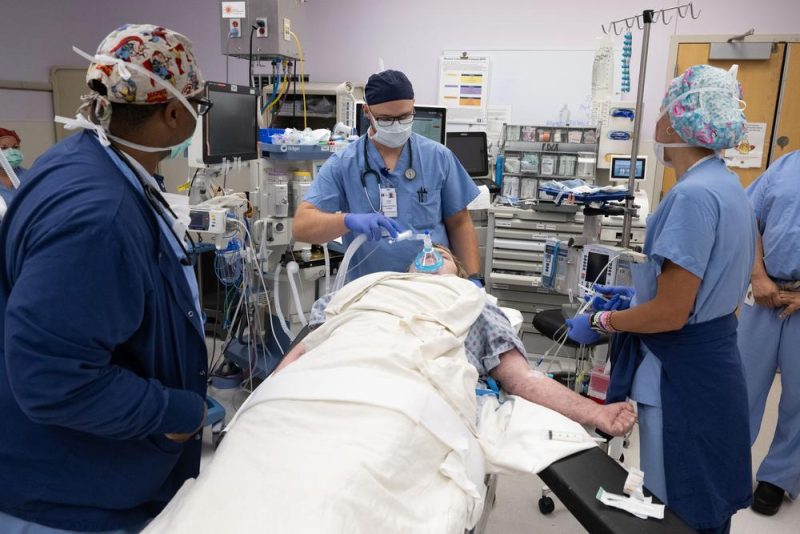
Akron’s Children’s anesthesia department has reduced emissions by using low-flow anesthesia techniques and cutting back on nitrous oxide without affecting patient care.
At Akron Children’s, sustainability is more than just a set of programs. It’s a long-term commitment to protecting the health of future generations.
“Our employees have led different initiatives over the years that have really made an impact on reducing waste and greenhouse gas emissions at the hospital,” said Brian Lapolla, vice president of operations. “It’s incredible work, and work that we’re hoping to continue to build on as an organization.”
Teams across the hospital are finding new ways to reduce environmental impact while still providing high-quality care.
Turning everyday waste into something meaningful
In busy areas like the operating room (OR), even small changes can make a big difference.
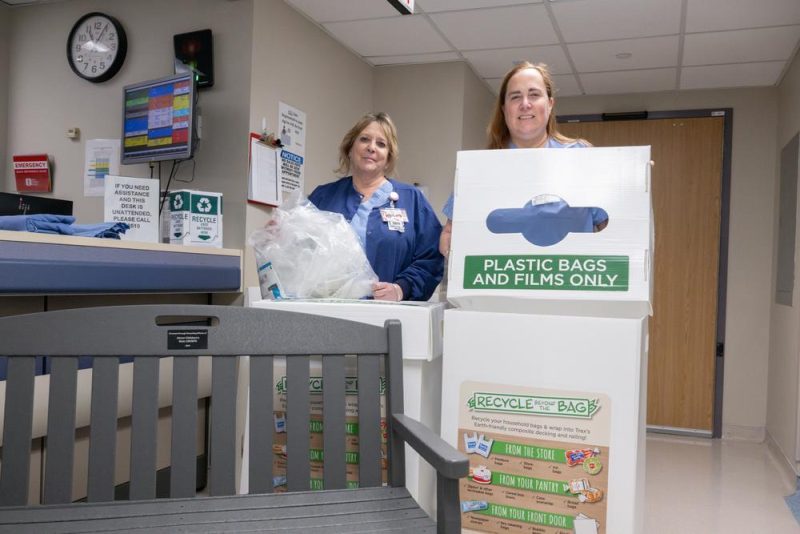
That’s what inspired Bonnie Humiston, clinical coordinator for the OR, to start a plastic film recycling effort. The program focuses on collecting flexible plastic packaging from sterile surgical supplies – material that would usually go to landfills.
“Between Jan. 1, 2025, and March 31, 2026, we recycled a little over 8,000 pounds of plastic film,” Bonnie said.
That brings Akron Children’s total to 14,000 pounds of plastic film recycled since the program began.
Between Jan. 1, 2025, and March 31, 2026, Akron Children’s recycled a little over 8,000 pounds of plastic film.
The team collected enough material to create several benches made from recycled plastic. Some of these benches were donated to the community, including a school, the Ronald McDonald House and other local partners.
The program was eventually paused – not for lack of interest, but because of the large amount of material being collected and the challenge of transporting it. The goal is to bring it back in the future as part of the hospital’s waste management system.
Even so, staff excitement shows how meaningful these efforts can be when people see the results of their work.
Rethinking anesthesia to reduce emissions
Another focus area is reducing greenhouse gas emissions from anesthesia. Through the Waste Anesthesia Gas Emissions Reduction (WAGER) program, pediatric anesthesiologist Dr. Peggy Allen and pediatric nurse anesthetist Tabitha Cline are leading efforts to change how gases like nitrous oxide are used in the OR.
“Nitrous oxide is used pretty commonly in pediatric anesthesia, and it lingers in Earth’s atmosphere for 114 years, so that has a pretty profound impact on the environment,” said Dr. Allen.
Due to Akron Children’s plastic film recycling efforts, enough material was collected to create several benches made from recycled plastic.
The team has reduced emissions by using low-flow anesthesia techniques and cutting back on nitrous oxide without affecting patient care.
The work has grown through participation in Project SPRUCE, an international group of pediatric hospitals focused on sustainability.
“While we continue to increase our caseload and minutes of anesthesia, we continue to decrease our emissions and nitrous oxide use,” said Dr. Allen.
The results show strong progress. In March 2026, the team had its lowest nitrous oxide use ever – just 6,099 liters across all anesthetizing locations for the month. That’s an 88% reduction compared to baseline, even though anesthesia time increased by 32%.
Over the past year, these efforts prevented an estimated 142 metric tons of carbon dioxide emissions.
Upgrading systems for long-term impact
The team is also improving equipment and systems. In 2025, Akron Children’s switched to e-cylinder delivery systems for nitrous oxide, replacing older central piping systems that are known to leak.
Once other departments make similar changes, the hospital plans to fully shut down the central piping system. This will help reduce emissions even more, lower costs and support future construction projects.
“It’s an enterprise-wide program and it has been inspiring to see so many colleagues embrace the positive changes,” Dr. Allen said. “We care about children and the future of our planet. We want to do anything we can to make this a better place for them, while continuing to provide excellent patient care.”
Sustainability efforts at the hospital also include how supplies are shipped and used. Each month, the hospital uses about 3,000 fewer shipping containers across 741 supply items. Over a year, that adds up to more than 36,000 fewer boxes.
Reducing waste through smarter supply chains
Sustainability efforts at the hospital also include how supplies are shipped and used. In the past, items were shipped to a storeroom before going to their final location. Now, many supplies are sent directly where they are needed.
According to Joseph Carr, vice president of supply chain and support services, this change has improved efficiency and reduced waste.
“This new approach helps us cut down on extra handling and reduce packaging waste,” Joseph said. “It supports our daily operations while also helping the environment.”
The impact has been significant. Each month, the hospital uses about 3,000 fewer shipping containers across 741 supply items. Over a year, that adds up to more than 36,000 fewer boxes.
In total, the program removes more than 210,000 pounds of cardboard from the waste stream each year. It also eliminates more than 72,000 cubic feet of packaging.
These changes also help reduce greenhouse gas emissions. The program avoids about 90 metric tons of carbon dioxide each year.
“That is equal to taking about 20 cars off the road for a year or saving around 10,000 gallons of gas,” said Joseph.
Another example of sustainability is happening in the hospital’s steam condensate recovery system. Instead of sending condensate down the drain, the system captures it and sends it back to the energy plant to be reused. This helps reduce both water and energy waste.
Smarter systems behind the scenes
Some sustainability efforts happen behind the scenes, but they still make a big impact.
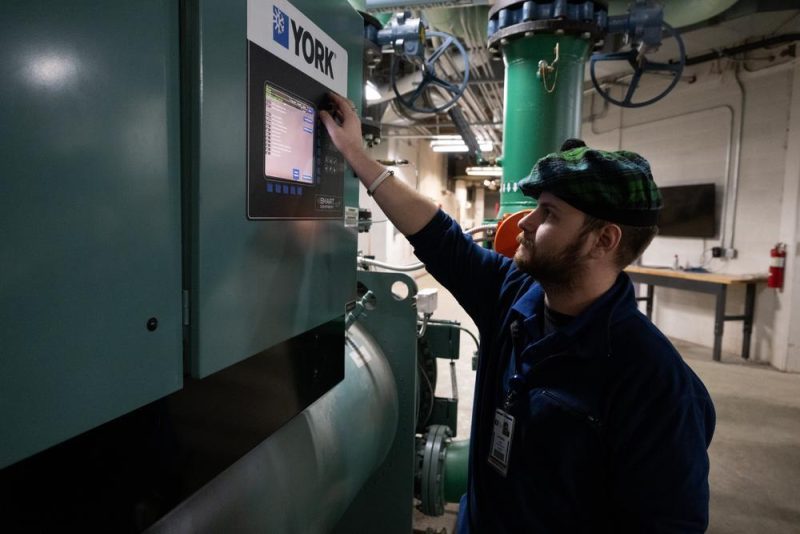
One example is the hospital’s steam condensate recovery system. Instead of sending condensate down the drain, the system captures it and sends it back to the energy plant to be reused. This helps reduce both water and energy waste.
So far, the system has recovered 44.1 million gallons of condensate and conserved 75.2 million gallons of water. It has also recovered 49.6 million MBTU of heat and avoided 5,052 metric tons of carbon dioxide emissions between 2022 and 2024.
The program is still growing. Condensate volume increased by 59% from 2022 to 2025.
“This system is a great example of how we’re thinking differently about resource use,” Brian said. “It reflects a circular approach where what was once considered waste becomes a valuable input for another process.”
This type of system, sometimes called industrial symbiosis, allows the hospital to reuse heat and water instead of wasting them, which improves efficiency and reduces the need for new resources.
Building on momentum
As these efforts continue, Akron Children’s is also finding new ways to involve employees across the organization.
“All of these employee-led programs have really contributed to making Akron Children’s a more environmentally friendly organization, and we think this is just the beginning,” Brian said.
Together, these programs support a larger goal: protecting both patient health and the environment. Because creating a healthier future isn’t just about what happens inside hospital walls – it’s also about the world kids will grow up in.
About Kathy Johnson - Senior Corporate Communications Specialist
Kathy Johnson is a northeast Ohio-based freelance writer, editor and public relations consultant with over 25 years of experience in the healthcare industry. She writes extensively for blogs, websites, newsletters and magazines. Since 1999, she has been the principal at New View Communications serving a variety of hospitals and healthcare-related clients.
Inside Children’s
Inside Children’s is an online community that provides inspirational patient and staff stories as well as information about health and parenting, hospital news, fundraising events and more.