Seeing upsetting events or natural disasters in the news can really affect kids. You may find it hard to know how, or even if, you should talk to your kids about these things. Akron Children’s Pediatric Psychologist Dr. Kelsey Brocker from the Lois and John Orr Family Behavioral Health Center offers these tips.
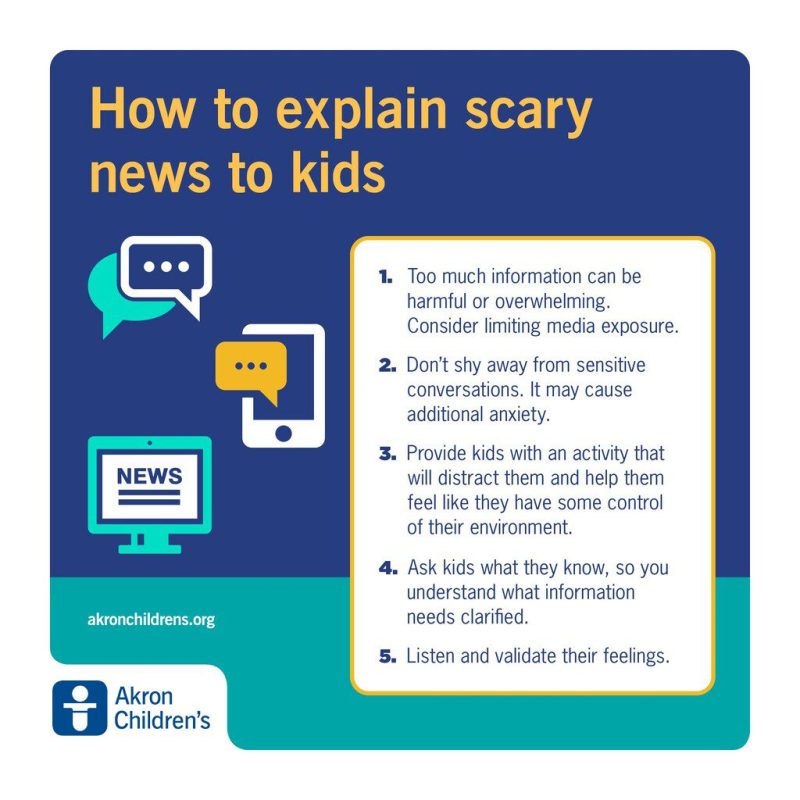
Be aware of your own reactions to a tragedy or troubling news.
“Children feed off their parents’ emotions. Stepping away to take a minute – to process information and your own emotions – may be a necessary first step,” Dr. Brocker said. “This will ensure you can talk to your child in a neutral, calm way.”
Ask your child what they heard and where they acquired the information.
Oftentimes, news outlets show bias – and social media outlets can skew the news even more. Being able to present facts to your kids from all points of view can help them understand the situation thoroughly.
Use parental controls on your kids’ devices.
“You can limit time around phones and even apps if you’re concerned about constant scrolling and an influx of information that is likely unreliable,” Dr. Brocker said. “Also, have conversations with your child about what they may see on social media in terms of ‘news.’ Do small check-ins to discuss reactions, as well as encourage them to judge for themselves how they emotionally respond to these news stories.”
Talk to your kids in age-appropriate ways.
While teens may want to talk about the events and voice their opinions, younger kids may have questions about their safety.
“The world can feel scary sometimes. It’s OK to say you don’t know why something happened, but people are working to ensure the situation doesn’t happen again,” Dr. Brocker said. “Take time to review all the things your family does to help keep yourselves safe, as well as places like their school and the city you live in.”
Keep a normal routine.
Most kids – and adults too – thrive by following a daily routine with predictable bedtimes and daily patterns.
Think of ways to help people and be kind.
It’s good to teach your kids about spreading positivity, whether in response to a tragedy or in everyday life. You can donate money or supplies to help people affected by the tragedy. Volunteer as a family for your school, place of worship or a community organization. Or do random acts of kindness to show that little things can make a big difference.
Seek help if your child shows lasting signs of anxiety.
“A lot of behaviors can be signs of anxiety,” Dr. Brocker said. “These can include being restless, having trouble focusing, picking at nails or skin and having a fluctuating appetite. If these signs continue and start to affect your child’s daily life, talk to their primary care doctor. Your child may need extra help, like therapy and/or medication.”
Look for the helpers.
Fred Rogers from the classic TV show “Mr. Rogers’ Neighborhood” once gave his timeless advice:
“For me, as for all children, the world could have come to seem a scary place to live. But I felt secure with my parents, and they let me know that we were safely together whenever I showed concern about accounts of alarming events in the world. And there was something my mother used to say: ‘Always look for the helpers,’ she’d tell me. ‘There’s always someone who is trying to help.’ I did, and I came to see that the world is full of doctors and nurses, police and firemen, volunteers, neighbors and friends who are ready to jump in to help when things go wrong.”
Similar stories:
For additional information, visit the parent resources tab on the Lois and John Orr Family Behavioral Health Center webpage. The National Child Traumatic Stress Network also as helpful information.