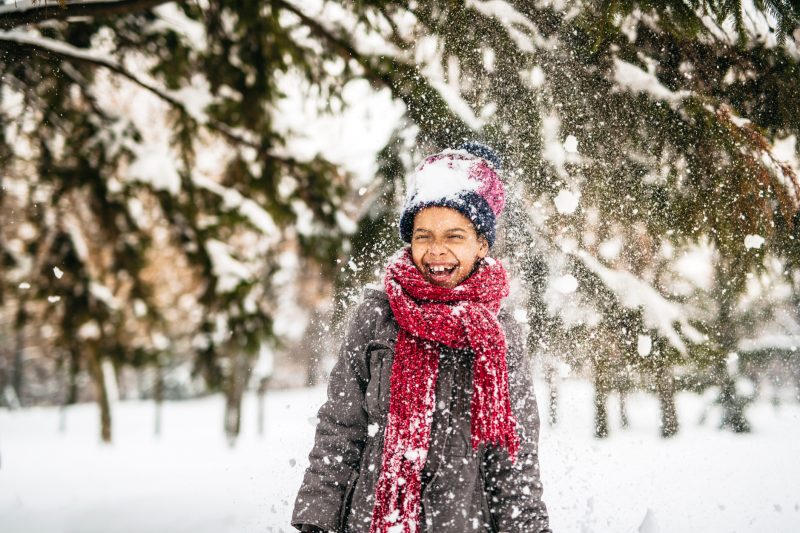
Kids can have plenty of winter fun if they’re dressed in warm layers, go inside regularly for breaks and change out of wet clothes or shoes.
Wind chills below freezing, long periods of time spent outside, wet clothing and exposed skin can all increase a child’s risk for frostbite, frostnip and other cold weather concerns.
About frostbite
Frostbite is an injury caused by freezing temperatures that leads to white, waxy skin that feels numb and hard. It usually affects the extremities, such as a child’s chin, cheeks, nose, ears, fingers and toes. Severe frostbite can go down to the muscles and bones, causing permanent damage and even resulting in amputation.
“Older adults and children are at high risk for frostbite. Signs include blister formation and potentially darker or dusky areas of the skin,” said Dr. Anjay Khandelwal, Marci M. Matthews Endowed Chair for Excellence in Burn Care. “Severe frostbite warrants early evaluation at a burn center like the Akron Children’s Burn Institute. It’s important to note we care for adult and pediatric patients.”
New frostbite treatments
Akron Children’s offers a new drug treatment that recently received approval from the Food and Drug Administration. “We are one of the first burn centers in the U.S. – and the only facility in northern Ohio – to use this new treatment,” Dr. Khandelwal shared. “It has been shown to decrease amputation rates. But timing is critical: Treatment must occur within 12 hours of the frostbite injury.
“In addition, we are one of only a handful of burn centers – and the only one in Ohio – to use an advanced, noninvasive imaging technique that helps to predict the severity of the frostbite injury,” he continued. “This allows us to target treatment and intervene earlier, which improves outcomes for our patients.”
Seek medical attention right away if your child shows signs of frostbite. Akron Children’s offers new frostbite treatment options to improve outcomes for patients.
About frostnip
Frostnip is a milder form of the cold injury, often causing some redness or paleness of the skin. “If your child shows signs of frostnip, have them go back inside the house to warm up,” Dr. Khandelwal recommended. “If there are any signs of frostnip, do not let your child go back outside that day. Secondary exposure to the cold temperatures can make the frostnip injury worse.”
Prevention tips
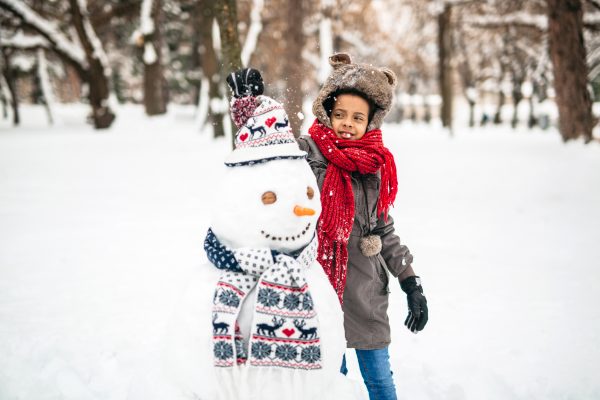
Plenty of warm layers and a little common sense can keep kids safe as they build forts, snowmen and make snow angels this winter. Dr. Khandelwal offers these tips to prevent frostbite or frostnip:
- Watch the weather. If it’s extremely cold with freezing wind chills, skip outdoor play. Even brief exposure to cold can cause frostbite.
- Dress kids in warm layers. Use hats, gloves, scarves or facemasks, thick socks and well-insulated boots to cover body parts that are most at risk for frostbite. Inner clothing layers that absorb moisture and outer layers that are windproof and waterproof are best.
- Take regular breaks. Kids shouldn’t be out in freezing temperatures for more than 15 minutes at a time. Have them come in between winter fun to warm up and rehydrate. It also gives you the chance to check for wet clothing and signs of frostnip or frostbite.
- Change wet clothing items or shoes immediately. Skin that is wet and cold can speed up the frostbite process. Wet clothes draw heat away from the body.
If you think your child may have frostnip or frostbite, slowly rewarm the area using warm water or a warm towel until sensation returns. It’s important to avoid hot water or heating pads because kids with numb hands won’t feel the heat and can be severely burned by water that is too hot.
“If the numbness doesn’t improve in a few minutes or if symptoms get worse, bring your child to the emergency room,” Dr. Khandelwal said. “Signs of frostbite require prompt medical attention.”
Learn more about the Akron Children’s Burn Institute.