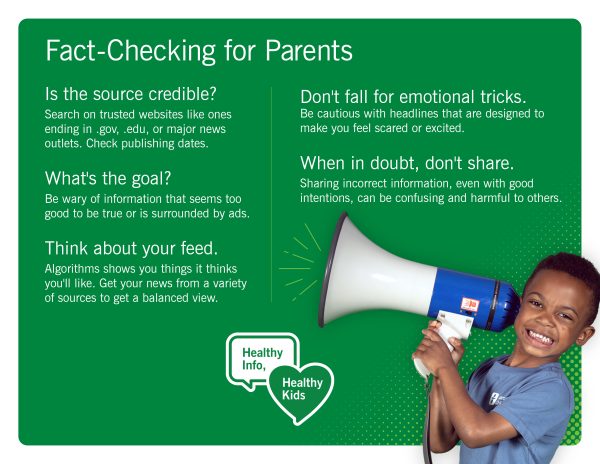
It’s OK to do online research about a health care topic. Just be sure to talk to your child’s doctor, who can explain the information based on your child’s specific condition.
Today, we can get information 24/7 on social media and TV. But is everything we read or watch true? Akron Children’s Pediatrician in Chief Dr. Shefali Mahesh explains what medical misinformation is and why it can hurt your kids.
What is medical misinformation?
People sometimes share health information that is inaccurate or confusing – and it doesn’t match what doctors know to be true. This is medical misinformation.
“Misinformation can spread quickly, sometimes overshadowing facts and making it more difficult to find the truth,” Dr. Mahesh said. “Misinformation can come from many places. For example, a scientific study could be shared without explaining it correctly. Other times, online groups may highlight personal stories or anecdotes and treat them like facts without relating it to real science.”
Dr. Mahesh notes the difference between misinformation and disinformation. “A lot of people use these words interchangeably, but they are different,” she said. “The biggest difference is intent. Misinformation is getting the facts wrong, and disinformation is spreading false information on purpose.”
Why medical misinformation is dangerous in pediatrics
Kids are vulnerable to medical misinformation because they don’t make their own health care decisions. “The parents are well-meaning but may be misinformed, and this can lead to confusion,” Dr. Mahesh said. “They may hold back certain preventive care, such as vaccines to protect their child from disease. Or they choose a natural remedy because they think it’s safer than medication. The adult decides without having all the correct information – and it may not be the right choice for their child.”

Dr. Shefali Mahesh
Sometimes false medical information for kids is shared in a way that makes parents feel like they are in control and making the best choice, even though it plays on emotions instead of facts. When this false information goes against a doctor’s advice, it can lead to serious or even tragic results.
Studies show that fake stories often spread faster than true ones on social media. “When you’re a parent worried about your child’s health, you may look for information that supports what you already believe,” Dr. Mahesh explained. “Search engines and social media track what you click on and then show you more of the same thing, even if it’s not true. This can trick you into thinking the information must be right just because you keep seeing it. This is called ‘confirmation bias.’”
Health professionals are still a trusted resource
Pediatricians and pediatric health care teams are specially trained to understand and explain science and medical information. A recent Kaiser Family Foundation poll found that doctors remain the most trusted source for health care information.
Dr. Mahesh encourages parents to talk to their child’s health care team about medical conditions, vaccines, treatments or health care trends. “It’s OK to do online research; just be sure to talk to your doctor about the science behind the health care topic,” she said. “Some of the information may be right, but it’s not specific to your child or their symptoms. It’s best to partner with your health care team to interpret information in the context of your child and their health condition.”
Healthy Info, Healthy Kids campaign
Parenting is hard, and it’s common to seek answers online. By staying alert, asking questions and relying on health care professionals, we can safeguard our kids from illnesses and misinformation itself. That’s why Akron Children’s recently launched the “Healthy Info, Healthy Kids” campaign.
“We want to stop the spread of medical misinformation, so you can make smart choices for your child,” Dr. Mahesh said. “Check our social media channels and other places for clear, simple information from our experts. Our goals are to listen, explain and guide you with the best medical facts.”