Home > Inside Blog > Tips & Advice > Akron Children’s encourages parents to screen for scoliosis while applying sunscreen
Akron Children’s encourages parents to screen for scoliosis while applying sunscreen
Kathy Johnson - Senior Corporate Communications Specialist
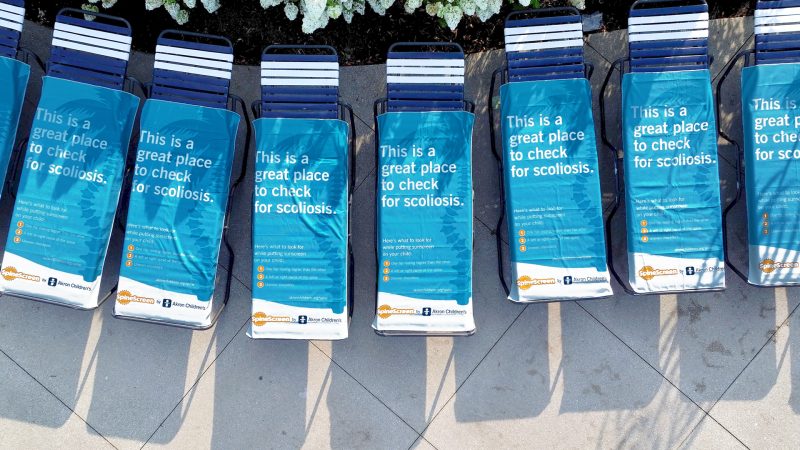
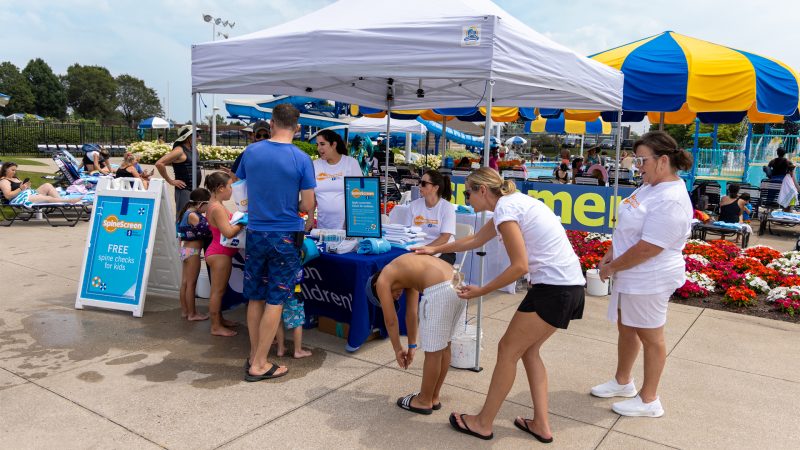
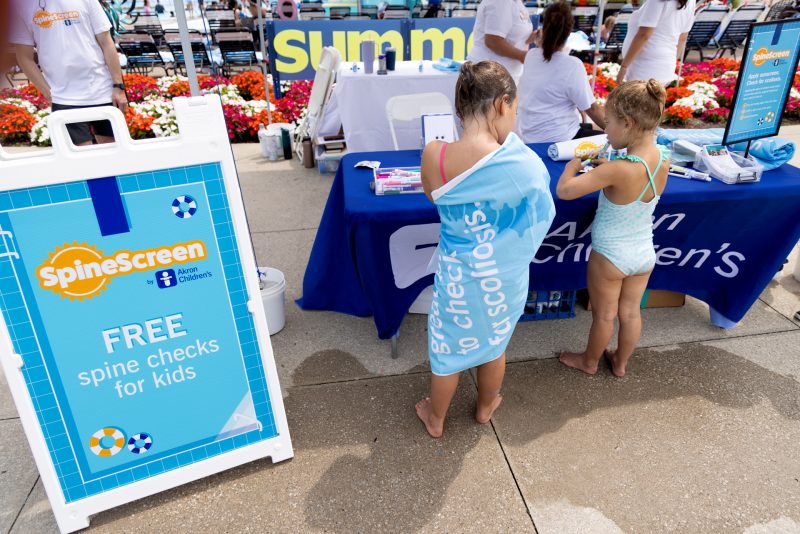
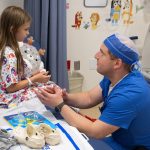
At the SpineScreen event, Akron Children’s providers screened kids for scoliosis and provided education to parents in the form of beach towels and bottles of sunscreen.
On Aug. 10, Akron Children’s hosted a SpineScreen event at the Beachwood Aquatic Center. With more than 100,000 new pediatric cases of scoliosis identified each year in the U.S., Akron Children’s has turned one form of protection into a new form of prevention by encouraging parents to check for signs of scoliosis when applying sunscreen – a moment nearly every family experiences during summer.
Akron Children’s held the first screening event last year at Edgewater Beach in Cleveland. In 2 years, the SpineScreen initiative has evaluated over 150 Cleveland kids for scoliosis and referred 13 cases for further assessment.
In 2 years, Akron Children’s SpineScreen initiative has evaluated over 150 Cleveland kids for scoliosis.
Early detection, early treatment
“We know that early detection is important. When scoliosis goes unrecognized and treatment isn’t initiated, it can progress and require surgery,” said Jessica Westfall, orthopedic nurse practitioner at Akron Children’s. “Untreated scoliosis can progress throughout life leading to pain, cosmetic concerns and early morbidity and mortality for adults.”
With school screenings for scoliosis no longer mandated in Ohio, not all children are being screened.
“We recommend annual screenings in order to detect scoliosis when it’s treatable, helping children to avoid surgery,” Jessica said.
SpineScreen encourages parents who routinely apply sunscreen to make one application a scoliosis check with screening instructions right on the bottle.
In fact, about 70% of the time, bracing is an effective treatment to stop or slow curve progression and prevent further spinal deformity.
Jessica said in the absence of professional screening, educating parents is the next best step to early detection.
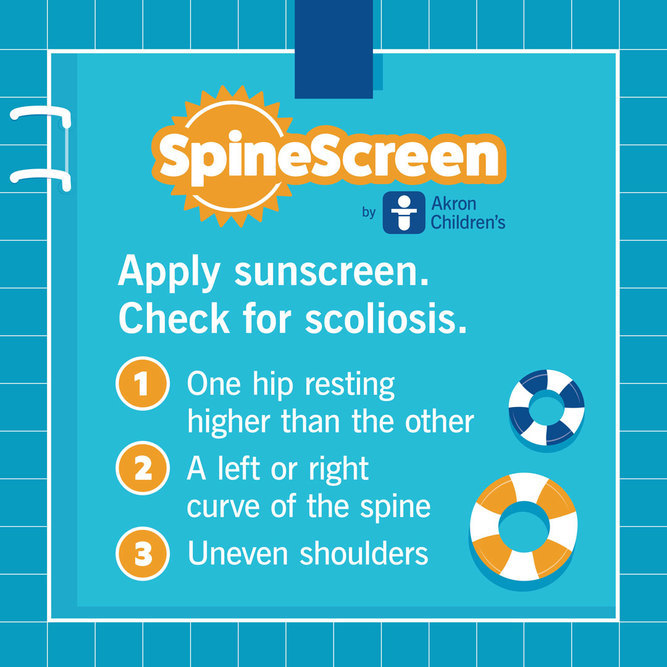
“SpineScreen encourages parents who routinely apply sunscreen to make one application a scoliosis check with screening instructions right on the bottle,” she said. “If the child has one hip that rests higher than another, shoulder blade lopsidedness, uneven shoulder height or a curve noted to the rib cage or lower back when bending forward, then parents are guided to learn more about scoliosis and spine services on our website.”
Things to look for
The body appears to lean to one side
A protruding rib cage
Clothes that don’t hang right
Head doesn’t appear centered on the body
Visible “S” or “C” shaped spinal curve when bending forward
Complaints of back pain
If you notice any of these signs, schedule an appointment with your child’s provider to have a thorough evaluation.
To learn more about scoliosis care at Akron Children’s, visit our Spine Center website.
About Kathy Johnson - Senior Corporate Communications Specialist
Kathy Johnson is a northeast Ohio-based freelance writer, editor and public relations consultant with over 25 years of experience in the healthcare industry. She writes extensively for blogs, websites, newsletters and magazines. Since 1999, she has been the principal at New View Communications serving a variety of hospitals and healthcare-related clients.
Inside Children’s
Inside Children’s is an online community that provides inspirational patient and staff stories as well as information about health and parenting, hospital news, fundraising events and more.