
Dr. Joe Congeni is set to retire from Akron Children’s on Aug. 1.
Dr. Joe Congeni was a Cleveland kid who grew up loving his hometown, sports and, early on, became a firm believer in the good that can come from being part of a team.
As he retires Aug. 1 from Akron Children’s, where he served as the long-time director of Sports Medicine until 2024, he considers himself one of the lucky ones, having had his dream job for nearly 40 years.
“I once read that only 8% of people ever get to land their dream job,” he said. “When they hired me in ’88, this is exactly what I wanted to do and where I wanted to do it.”
He was named director of the new center right out of his pediatric sports medicine fellowship, and under his leadership, it has grown in geographic size, expertise and reputation.
Today, the center, led by Dr. Derrick Eddy, has 10 board-certified physicians in Akron and Boardman, a sports psychologist and a dietitian. The team works alongside certified athletic trainers embedded in 25 school districts throughout the region, a team of sports-focused physical therapists and the pediatric orthopedic surgeons who share the same floor.
“Dr. Congeni leaves behind one of the premier pediatric sports medicine programs in the country,” said Dr. Eddy. “It is a team of highly skilled clinicians who are deeply committed to doing what is best for young athletes, helping them recover quickly and return to the sports they love with confidence and care.”
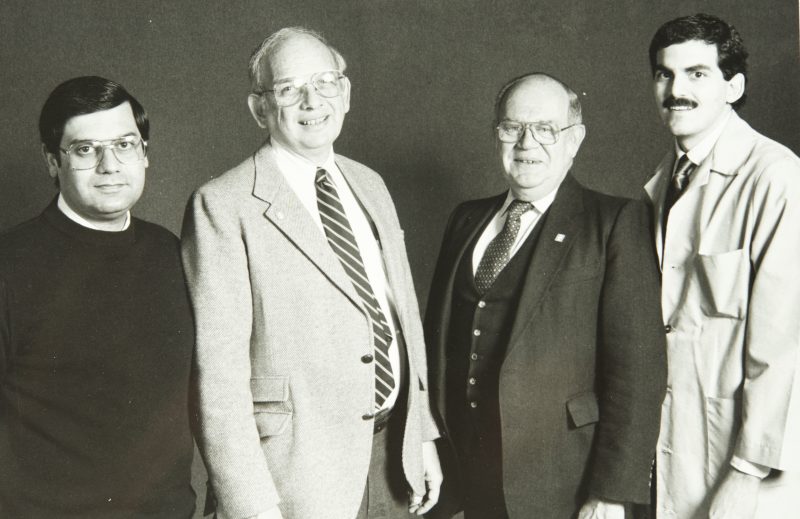
Drs. Rajeev Kishore, Robert Stone, Bruce Rothmann and Joe Congeni, division chiefs of Pediatric Allergy/Immunology, Pulmonology, Surgery and Sports Medicine, respectively.
Back in the game
The walls of the exam rooms in the Sports Medicine Center are decked with photos. Football players once again padded up. Ballet dancers back en pointe. Cross-country runners reunited with their teams after stress injuries. Over decades, the young athletes have sent Dr. Congeni and his colleagues their photos with notes, thanking them for getting them healed and back in the game.
Dr. Congeni estimates that at least 14 of his patients have made it to the National Football League and 8 to 10 went on to become Olympians.
“I also loved seeing kids who were nowhere near those levels but just wanted to join the team and learn about life,” he said. “I would spend just as much time with the kid whose goal was just to make the team, and definitely there was no preference for the kid who might someday be playing professionally.”
Finding their niche
In contrast to adult programs based in orthopedic centers, 75% to 80% of youth athletes who are injured do not require surgery. So, in the late ’80s, pediatric hospitals began to open primary care sports medicine centers focusing on wellness and injury prevention.
Pediatricians appreciated having colleagues who were experts in labral tears and stress fractures who could get their patients in within 24 to 48 hours.
“Kids – and parents – have an urgency about knowing if they can play this week or the rest of this year,” he said. “So, return-to-play decisions are a big part of primary care sports medicine.”
After graduating from the University of Notre Dame, Dr. Congeni returned to northeast Ohio for medical school at the Northeastern Ohio Universities College of Medicine in Rootstown. He did his pediatrics residency and his fellowship at Akron Children’s.
When it came time to decide whether to stay at Akron Children’s or take offers elsewhere, his older brother, Dr. Blaise Congeni, then director of Infectious Disease Medicine at Akron Children’s, played a key role.
“Blaise recruited me, no doubt,” said Dr. Congeni. ”We’re a close family and he said, ‘This is a world-class pediatric hospital. I’ve trained at a lot of places in infectious disease around the country, and this is a great secret for many people. You can do a lot of things right in our hometown, with our family here, and you’ll have all the tools you’ll need.’”
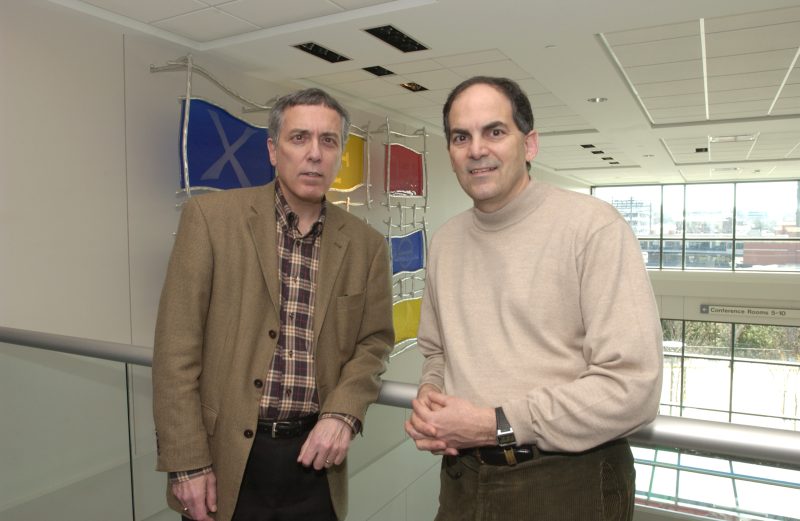
Drs. Blaise and Joe Congeni, brothers and longtime directors of Infectious Disease and Sports Medicine at Akron Children’s.
Legacy
Dr. Congeni developed the Primary Care Pediatrics Sports Medicine Fellowship at Akron Children’s, the first of its kind at a pediatric hospital in the U.S. in 1990. The 44 (and counting) graduates of that program are now physicians treating patients, leading research and directing similar programs at hospitals all across the country.
Another point of pride is expanding Akron Children’s regional affiliation with school districts to provide middle school and high school athletic programs with certified athletic trainers. These professionals work alongside coaching staff to make sure athletes are training safely, whether it be staying hydrated on hot practice days, doing sports physicals or recognizing serious injuries during games.
Dr. Congeni said, for whatever reason, there was a perception that sports medicine was the domain of “wealthier” suburban school districts, so he talked with then hospital CEO Bill Considine about making sure kids in rural and urban districts also had access to trainers. The commitment was there.
“We really expanded our coverage to the urban schools, the rural schools,” he said. “We also took coverage to the junior highs and the dance and gymnastic centers, because those kids have a really high rate of injury.”
The evolution of concussion protocols
During his career, Dr. Congeni has written 19 scientific papers and chapters and been involved with 21 research projects. But perhaps the topic he has most closely been identified with is concussion, including serving as the principal investigator of a multisite study to evaluate the effectiveness of a “cooling cap” to improve outcomes following a concussion.
He has overseen dramatic changes in how sports concussions have been treated. In the late ’80s, he watched first-hand as kids who had suffered severe hits – “wobbling, running to the wrong huddle” – were returned to play.
At Akron Children’s, as with other children’s hospitals, these athletes were referred to neurologists for assessment. But with an average 4- to 6-week wait for appointments, it made sense for expertise to fall to sports medicine physicians as well.
Dr. Congeni served on several national committees affiliated with the American Academy of Pediatrics and the Pediatrics Research in Sports Medicine to discuss protocols involved with signs and symptoms of concussion, diagnosis and return-to-play decisions.
The Sport Concussion Assessment Test (SCAT) is now the universal tool used by medical professionals to make a concussion diagnosis.
“Neurologists still see the most severe cases but, with these guidelines, the majority of concussions can now be managed by primary care physicians,” Dr. Congeni said.
The science continues to evolve.
“During my career, there have been changes in guidelines, rule changes, equipment changes. There was even some serious talk about doing away with certain contact sports for youths because of concussion risk,” he said.
For the kids who suffered concussions, the science has moved from “complete mental rest” in the immediate aftermath of the head injury to a “concussion rehab” approach where the young athlete takes a stepwise progression from rest to gradually increasing activity and perhaps even working with therapists on specific areas like balance, processing speed and memory.
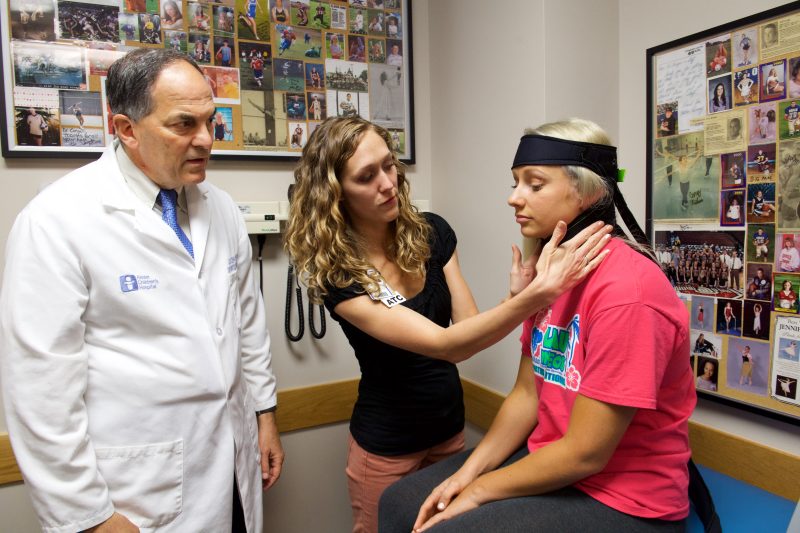
Dr. Congeni and athletic trainer Rachel Miller work with a patient as part of the “Pro-2-Cool System” clinical trial.
Bigger, better, stronger
Over his 40 years of practice, Dr. Congeni has frequently noted that young athletes have become “bigger, stronger, faster.”
He has seen good and bad trends.
New offerings like rugby, lacrosse, bowling and the explosion in women’s sports over the past few decades are positive trends.
“The way sports can help kids build self-confidence is definitely a plus,” Dr. Congeni said. “However, as with every other area of adolescent medicine, in the last decade or so, I’ve seen more anxiety in sports. We did a few studies, and it was an eye-opener how many kids admitted to anxiety related to school, their sport, social media and other things in their lives.”
Connecting with patients and the public
“Not only was he the most dedicated team doc around, but he also was so excited about it,” said Dr. Patrick Riley Jr., a pediatric orthopedic surgeon at Akron Children’s. “He greeted every athlete and parent with a smile and charming demeanor. You could see his eyes light up as he quickly figured out a diagnosis. Then he would quickly give his expert treatment plan with so much confidence and so much optimism. Joe had a unique ability to calm nervous parents down. It was impossible for patients and parents to not love this doctor!”
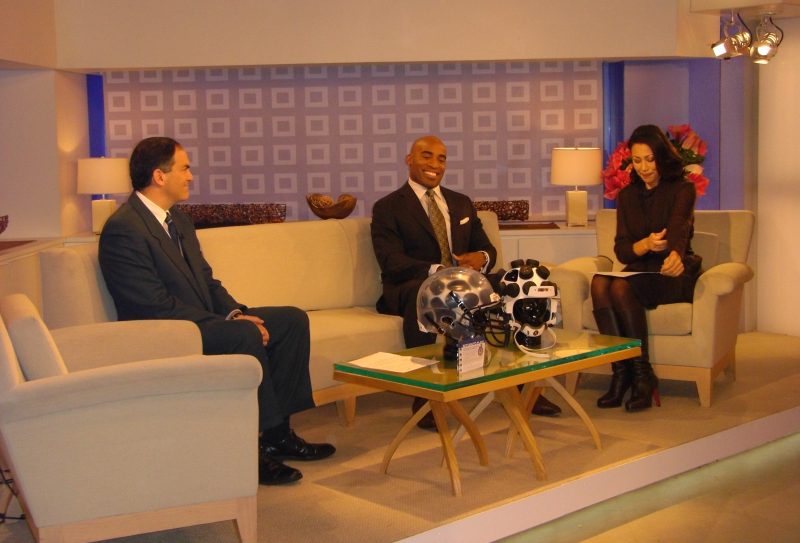
Dr. Congeni, on the set of The Today Show, discussing concussions with Tiki Barber and Ann Curry.
Dr. Congeni is also a gifted communicator who enjoyed sharing his expertise of all things sports medicine through countless media interviews, not only with Northeast Ohio reporters but with national outlets like the Today Show, the New York Times and Sports Illustrated. Since 1995, he’s joined WAKR AM talk show host Ray Horner every Wednesday morning to discuss trending sports medicine topics.
In late 2024, Dr. Congeni transitioned to a new role as physician liaison for the Akron Children’s Foundation. He will have the title emeritus director of sports medicine in retirement. He plans to devote more time to his church and enjoy his time with his wife, Karen, 6 children and soon to be 11 grandchildren.
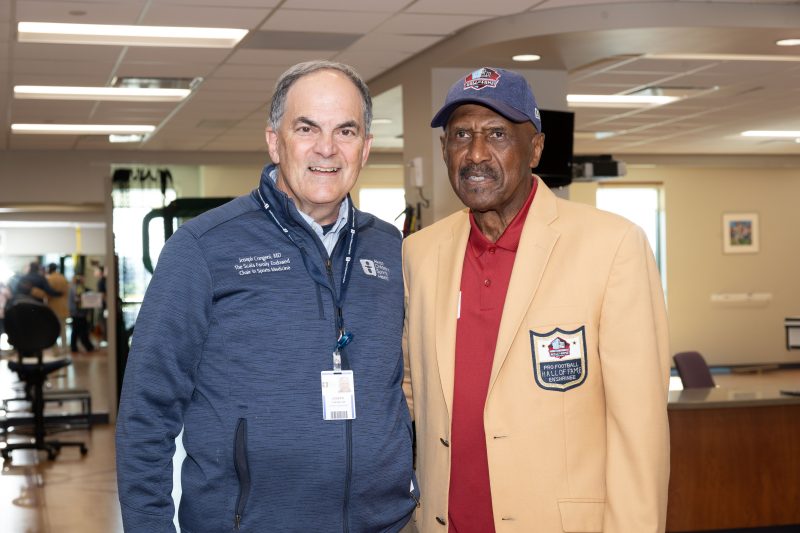
Dr. Congeni recently gave retired NFL legend Charlie Joiner, a member of the Pro Football Hall of Fame, a tour of the hospital, while visiting patients.